

Your Essential Guide to a LiPo Battery Safe Bag
A LiPo battery safe bag is really a purpose-built, fire-resistant pouch designed to contain the intense heat and flames that erupt when a LiPo battery goes wrong. Think of it as your first line of defence against a catastrophic battery fire—an essential piece of kit that protects your gear, your workshop, and yourself.
Why a LiPo Bag Is Essential for RC Racing
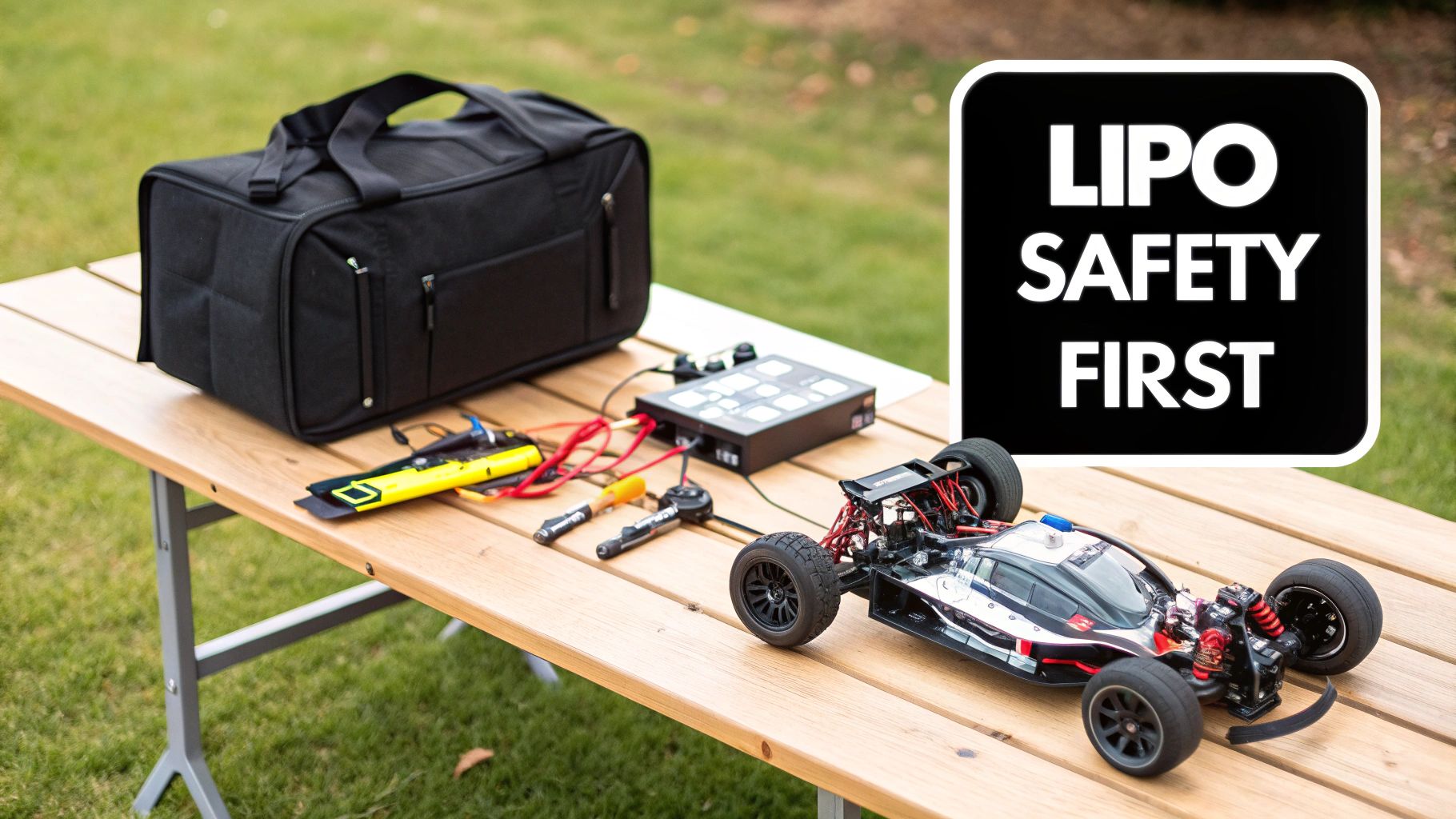
When you've poured time and money into a high-performance RC setup, it’s easy to get lost in the details of the chassis, motor, and electronics. But the powerful LiPo battery that fuels your race car also carries an inherent risk. This small power source can fail violently in a process we call thermal runaway.
This isn't just a minor malfunction. It's a rapid, self-sustaining chemical reaction that generates extreme heat, fire, and toxic smoke. In a matter of seconds, it can completely destroy your expensive equipment and anything nearby.
Protecting Your Investment
Imagine a battery failing while charging in your pit area. Without containment, the fire could easily spread to your Awesomatix chassis, Hobbywing ESC, Sanwa servos, and all your other valuable gear. A LiPo battery safe bag acts like a small, portable firewall, containing the initial—and most dangerous—phase of the incident.
This gives you precious time to safely manage the situation and stops a small battery failure from turning into a total disaster.
A LiPo bag is not just an accessory; it's an insurance policy. It's a small, one-time investment to protect thousands of dollars in high-performance racing equipment from the unpredictable nature of battery chemistry.
The Cornerstone of Responsible Racing
Using a LiPo safe bag is a fundamental part of responsible trackside etiquette and safety. It shows you’re committed to protecting not just your own gear, but also the safety of fellow racers and the venue itself.
Consistent use during charging, storage, and transport is a non-negotiable part of the hobby. Proper handling also means keeping your batteries at the correct voltage, a topic you can dive into with our detailed guide on LiPo battery storage voltage. By making these practices a habit, you ensure reliability and prevent accidents before they ever happen.
How a LiPo Battery Safe Bag Actually Works
Think of a LiPo safe bag less like a simple pouch and more like a piece of specialized safety equipment. Its job isn't to be indestructible; it’s designed to manage a dangerous situation for a critical window of time, giving you a chance to react.
The secret is in the materials and construction. The core of any decent LiPo bag is a tough, woven fibreglass fabric. This stuff is incredibly fire-resistant and can handle extreme heat—often up to 800°C—without melting or bursting into flames itself.
The Science of Containment
When a LiPo battery goes into thermal runaway, it unleashes a violent burst of heat and flame. The fibreglass weave in a safe bag does two things at once. First, it physically contains the battery and any molten mess, stopping it from spraying out and setting your workbench or pit table on fire.
Second, and just as important, it chokes the fire by cutting off its oxygen supply. By sealing the battery inside, the bag smothers the flames and dramatically reduces the intensity of the event.
A LiPo safe bag doesn't stop a battery failure. It turns a sudden, uncontrolled fire into a manageable, contained incident. It buys you precious seconds to get the whole thing somewhere safe, like outside on a concrete slab.
Venting and Sealing Explained
A key feature you'll see on a quality LiPo bag is a robust velcro flap. This isn't just to keep the battery from falling out. During a thermal event, the battery releases a huge amount of hot, high-pressure gas.
The bag is designed to vent these gases in a controlled way. The strong seams and velcro closure let that pressure escape without the bag ripping open, all while keeping the actual flames from jetting out. This controlled release is what prevents a much more violent explosion.
This small-scale containment mirrors what's happening at an industrial level. As massive battery storage facilities become more common, new safety rules are being written to manage fire risks—a lesson we can apply directly to our hobby. These big systems focus on containing heat and venting gases, just like a LiPo bag does for our 2S packs, helping to keep our Sanwa and Mon-Tech gear from going up in smoke. Understanding this principle is a core part of implementing effective control measures for risks, whether you're at the track or in a workshop.
Choosing the Right LiPo Safe Bag for Your RC Gear
Picking a LiPo battery safe bag isn't as simple as grabbing the first one you see off the shelf. For serious RC racers, where every component choice matters, selecting the right bag is just as critical as choosing the right tires for a specific track surface. The perfect bag has to be the right size, built from quality materials, and have a closure you can trust.
You wouldn't show up to an off-road race with a touring car setup, right? The same logic applies here. A bag that’s too small won't have the space to contain a thermal event safely, while one that's too big lets the battery slide around, risking damage to the pack and its connectors.
Matching Size to Your Battery Collection
If you're racing 1/10 touring or 1/12 pan cars, you’re almost always working with 1S and 2S LiPo packs. Your goal is to find a bag that holds your batteries snugly but leaves a little extra room for air to circulate. This ensures that if a battery does fail, the bag has enough internal volume to handle the initial puff of hot gases without bursting at the seams.
Think about your race-day routine. Are you charging a single 2S pack between heats, or do you bring four or five fully charged batteries to a race meet? Your answer will determine whether a smaller, single-battery pouch or a larger multi-battery bag fits your workflow better.
This diagram breaks down how a quality bag's multi-layered construction, oxygen-starving seal, and flame containment work together to manage a battery failure.
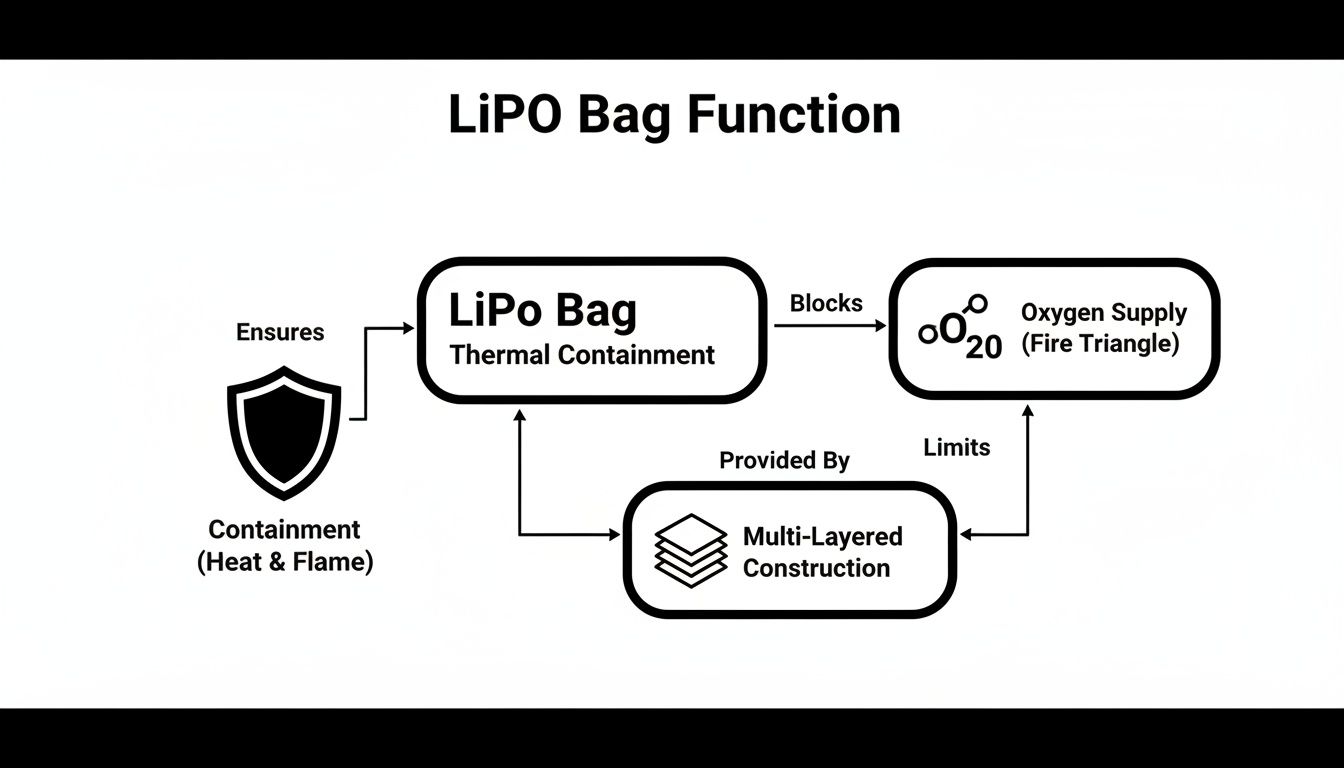
As you can see, each feature plays a specific role in turning a sudden, dangerous fire into a controlled, manageable event.
Material Quality and Closure Design
A LiPo safe bag’s real value comes down to its construction. You want to see bags made from a high-quality, woven fibreglass fabric. This material is specifically designed to handle the intense heat of a LiPo fire, which can hit temperatures up to 800°C. The stitching needs to be tough, with reinforced seams that won't pull apart or fray under pressure.
Just as important is the closure. A strong, wide velcro flap is the industry standard for a good reason. It creates a solid seal that contains flames and molten material while still allowing high-pressure gases to vent in a controlled way. A weak or narrow strip of velcro is a huge red flag—it simply won't hold shut during a violent thermal event.
To help you find the perfect fit, here’s a quick guide matching common RC battery loads to the right bag size.
Our Top Recommended LiPo Bag
| Battery Load | Recommended Bag Size | Best Use Case | Our Recommended Product |
|---|---|---|---|
| 1-2 x 2S Stick/Shorty Packs | 240 x 180 x 65 mm | Charging a single pack at the track or storing a couple of batteries at home. | TPR LiPo Safety Bag |
This table should give you a solid starting point. The key is to match the bag to how you actually use, charge, and transport your batteries on race day.
Your LiPo safe bag is an active piece of safety gear. Its materials and design are engineered to do a specific job under extreme stress. Investing in a well-made bag is really an investment in protecting your entire RC gear collection.
Going with a proven product like a quality LiPo Safety Bag from TPR ensures you get the protection you need. It's sized specifically for the typical 1S and 2S packs serious racers use and has the durable construction needed for trackside reliability. By matching your bag to your batteries, you build a complete safety system for your high-performance equipment.
Safe Charging, Storage, and Transport Practices
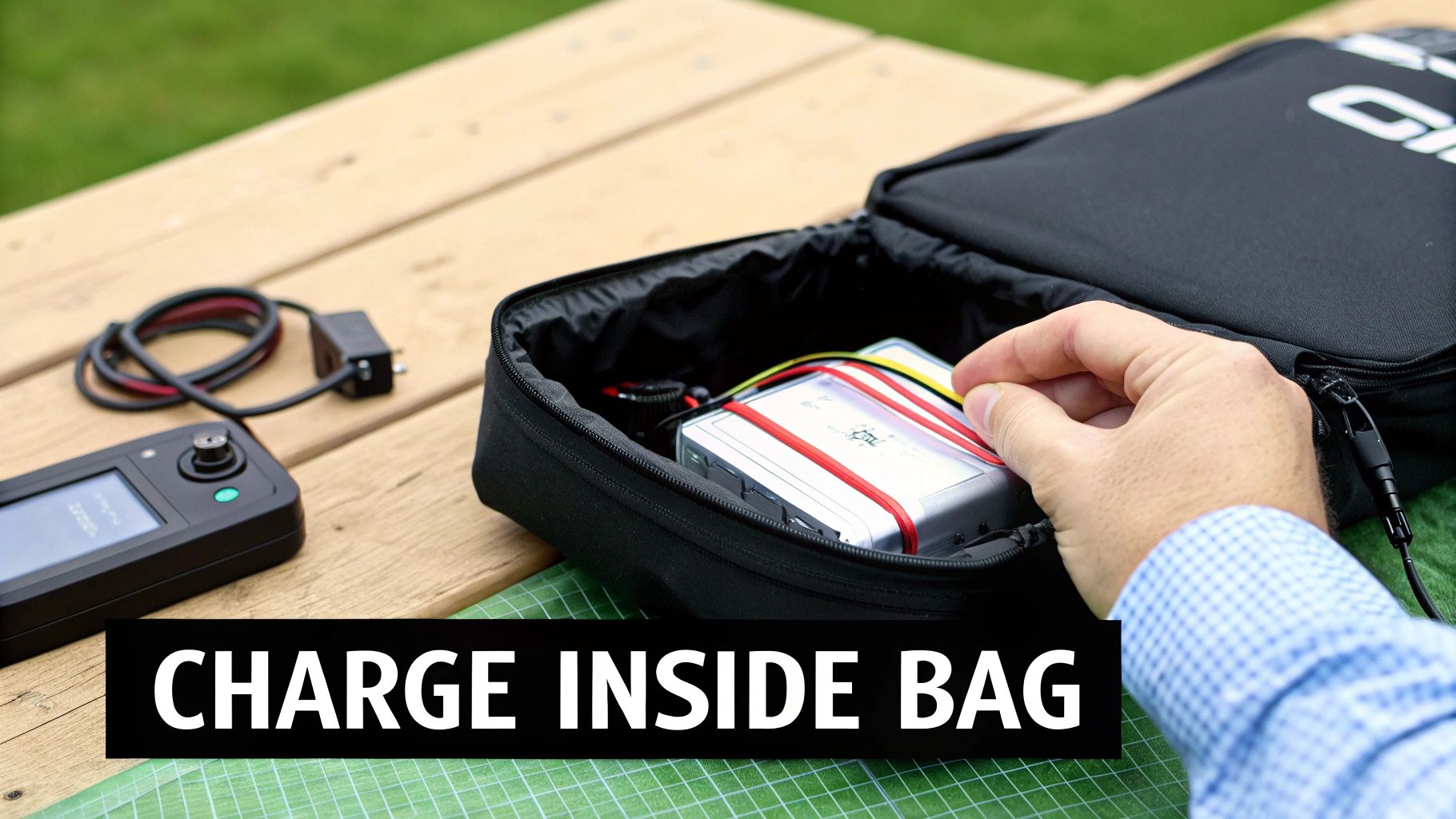
Owning a LiPo battery safe bag is the easy part. The real work is making its use a non-negotiable habit every single time you handle your batteries. True safety isn't just about having the gear; it's about building consistent routines for charging, storing, and transporting your packs. These simple workflows are just as important as the high-performance equipment they protect.
The Golden Rules of Safe Charging
If a LiPo is going to fail, it's most likely to happen during charging. This is the moment of highest risk. That’s why creating a disciplined charging ritual is the single best thing you can do to prevent a disaster in your workshop or at the track. It's not about complicated procedures—it's about a few simple rules you never, ever break.
- Always Charge Inside the Bag: This one is non-negotiable. Never charge a LiPo outside its safety bag. Place the bag on a fire-resistant surface like a concrete floor, ceramic tile, or a metal tray. Absolutely never on a wooden workbench, carpet, or anything else that can burn.
- Never Leave Batteries Unattended: A charging LiPo is not something you can set and forget. You need to stay within sight and earshot, ready to react immediately if something looks, sounds, or smells wrong. This is especially critical during the balancing phase of the charge cycle.
- Use a Quality Charger and Correct Settings: A cheap, unreliable charger is a risk you can't afford to take. Always double-check that your charger is set to the correct cell count (2S for a 7.4V pack, for example) and the right chemistry (LiPo). For a deeper dive into LiPo specifics, check out our guide on LiPo batteries in Canada.
Think of your LiPo bag as your designated charging station. Just like a pilot runs through a pre-flight checklist, you should run through your safety checklist before every charge. This simple, repeatable process is what keeps you, your gear, and your home safe.
Best Practices for Storage and Transport
Your responsibility doesn't end when the charger beeps. How you store and transport your LiPos is just as critical for their longevity and your safety.
For any storage longer than a day or two, get your batteries to their proper storage voltage—that's typically between 3.8V and 3.85V per cell. Storing them fully charged or completely dead puts a ton of stress on the cells and seriously increases the risk of failure. Keep them inside their LiPo safe bag in a cool, dry place, away from direct sunlight or extreme temperatures. A LiPo bag is your first line of defence, but it’s smart to pair it with other essential home fire safety equipment like a smoke detector and fire extinguisher.
When it's time to head to the track, make sure your batteries are transported securely inside their bags within your pit case. You don't want them bouncing around, which can cause physical damage to the cells or connectors—a classic trigger for a short circuit. For Canadian racers, a quality LiPo bag provides that essential layer of protection, ensuring your race day isn't cut short by a completely preventable accident.
How to Inspect and Maintain Your LiPo Safe Bag
Your LiPo safe bag is a critical piece of safety gear, but just like any other high-performance component in your RC setup, it needs regular attention to do its job. It’s not indestructible. Wear and tear can seriously compromise its ability to protect you and your equipment, so treat it with the same care you give your chassis or electronics.
A consistent inspection routine is your best friend here. Before every race day or charging session, take a moment to give the bag a quick but thorough visual check. This simple habit can mean the difference between a contained incident and a full-blown disaster.
Performing a Thorough Visual Inspection
Think of this as part of your pre-race checklist. You’re looking for any sign that the bag’s structural integrity has been compromised. Even tiny defects can become massive failure points under the intense heat and pressure of a thermal runaway.
Here’s what to focus on during your inspection:
- Examine the Seams: Go over all the stitching along the edges of the bag. Look for any fraying, loose threads, or places where the seams are starting to pull apart. The seams are the bag's skeleton, and they have to be perfect to hold back the force of expanding gases.
- Check the Material: Inspect the woven fibreglass fabric, both inside and out. You're searching for any punctures, tears, or burn marks from a previous close call or an accidental touch with a soldering iron. A hole of any size makes the bag unsafe—it's a direct escape route for flames.
- Test the Velcro Closure: This is one of the most common failure points. Open and close the flap a few times. The velcro should grab hard and create a tight seal that takes a firm pull to open. If it feels weak, peels away too easily, or is gunked up with debris, it can no longer guarantee containment. A bag that won’t seal right isn't a safe bag anymore.
A compromised LiPo battery safe bag is a risk you just can't take. If you find any damage—frayed seams, a small puncture, or a weak seal—that bag needs to be retired immediately. It's done its job, and it's time for a new one.
Simple Cleaning and Storage Tips
A little maintenance will go a long way in extending your bag's life. To clean it, just wipe it down with a damp cloth to get rid of any dirt or grime. Stay away from harsh chemicals or soaking it in water, as that can break down the fire-resistant materials.
When you're not using it, store your LiPo safe bag in a cool, dry place away from direct sunlight. This keeps the materials from getting brittle over time, making sure it’s always ready to perform when you need it most.
Even the most seasoned RC racers can fall into bad habits. When it comes to LiPo batteries, these seemingly small shortcuts can introduce massive risks that a LiPo battery safe bag is designed to mitigate.
Learning to spot and avoid these common mistakes is one of the fastest ways to improve your trackside safety and protect your high-performance gear.
Overstuffing the Bag
One of the most frequent errors is overstuffing a bag. It’s tempting to squeeze four or five 2S packs into a bag designed for two, but this completely defeats its purpose. A bag needs that extra space to safely contain the initial burst of heat and gas if a battery has a thermal event.
Without that buffer zone, the pressure can cause the seams to fail. Suddenly, a contained incident becomes an open fire in your pit area. Always give your batteries some breathing room.
Forgetting About Ventilation
Another critical mistake is charging inside a completely sealed bag. While a LiPo safe bag is made to contain flames, it also has to vent the high-pressure gases that a failing battery produces.
The best practice is to run your charging leads out through the side of the velcro flap, leaving a small gap. This allows gases to escape in a controlled way. Sealing it airtight turns the bag into a potential pressure bomb, and that’s the last thing you want.
A damaged LiPo safe bag is not a safe bag at all. Using a bag with frayed seams, a weak velcro seal, or a small puncture out of convenience is like wearing a seatbelt that’s been cut halfway through—it provides a false sense of security and will fail when you need it most.
Ignoring Risks for the Sake of Speed
The pressure of race day can lead to dangerous shortcuts. One of the worst is quick-charging a battery between heats without placing it in a LiPo bag. Sure, it might save you thirty seconds, but it introduces an unacceptable level of risk to you, your fellow racers, and your expensive equipment.
Always take the time to do it right. This discipline is crucial.
For Canadian RC racers sourcing from digital-rc, the importance of using a LiPo safe bag cannot be overstated. These bags are specifically designed to contain potential thermal runaway events, which are a known risk with the powerful 1S/2S batteries used in 1/10 touring builds. Adopting these safety-first practices ensures you protect your investment and maintain a safe racing environment for everyone.
Common Questions About LiPo Bag Safety
Even with the best safety habits, a few questions always seem to pop up at the track. Here are some quick, straightforward answers to the most common things racers ask about using a lipo battery safe bag the right way.
Can I Charge Multiple Batteries in One Bag?
This is probably the most frequent question we hear, and the answer is a firm no. You should never charge more than one battery in a single bag.
If one pack has a thermal runaway, it will instantly ignite any other batteries right next to it. That turns a small, contained incident into a much bigger, more dangerous fire. The best practice is simple: one battery, one bag. Every time.
When Should I Replace My LiPo Safe Bag?
Treat your LiPo bag like any other piece of safety equipment—it wears out and needs to be replaced. If you see any physical damage like tears, punctures, or seams that are starting to fray, it's time for a new one.
The most critical thing to check is the Velcro closure. If it feels weak and doesn't create a strong, tight seal anymore, the bag is done. A bag that can't close properly offers a false sense of security and won't contain a fire when you need it to.
Are LiPo Bags Completely Fireproof?
No, and it's essential to understand the difference. These bags are fire-resistant, not fireproof. Their job is to contain the initial, violent blast of a LiPo failure—the intense flames and super-heated gases—for a short period.
This gives you those critical few seconds to react, grab the bag, and get it outside onto a non-flammable surface like concrete. Think of it as your first line of defence, not an indestructible fireproof vault.
At digital-rc, we stock the gear you need to stay safe at the track. Find the perfect LiPo bag for your setup by visiting us at https://digital-rc.ca.