

Build and Manage High-Performance RC Car Tracks
The soul of a great race isn't just about pure speed—it's born from a layout that challenges drivers and sparks those thrilling, bumper-to-bumper battles. For competitive 1/10 touring and 1/12 pan cars, a well-designed RC car track is a perfect blend of technical skill and high-speed commitment. It tests every single aspect of a driver's ability and their car's setup.
Designing a Track That Fuels Competition
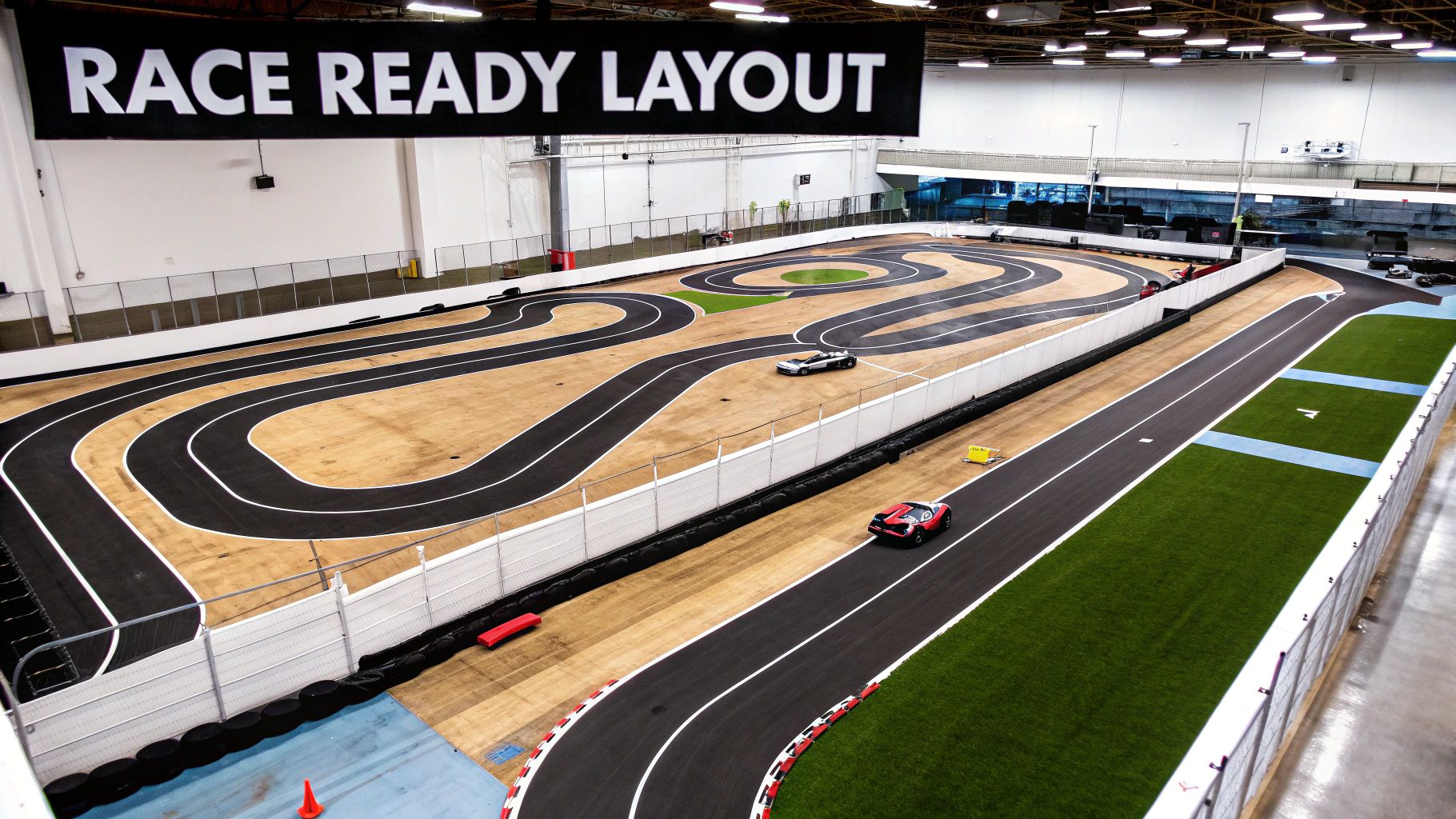
Moving beyond a simple oval is the first real step toward creating a memorable racing venue. The best layouts are a conversation between raw speed and surgical precision. They demand a perfect balance from the car and push drivers to find that perfect rhythm, lap after lap.
A great design always starts with a clear vision. What kind of racing do you want to see? Are you aiming for a track that favours raw horsepower, or one that rewards technical driving and a nimble chassis? The most successful tracks manage to do both. They feature a flowing combination of elements that keeps drivers on their toes and opens up multiple racing lines, which is key for encouraging clean overtaking.
The Foundation of Flow and Challenge
The secret to a compelling layout is all about variety and flow. A track should feel like a cohesive journey, not just a random series of disconnected corners. You have to think about how one section sets up the entry for the next.
For instance, a long, fast straightaway should feed into a heavy braking zone and a tight corner. This is a classic combination that tests a car's brakes and the driver's nerve. Follow that up with a series of flowing chicanes or S-bends, and now you're testing the car's agility and how quickly it can change direction.
The ultimate goal is to create a circuit where no single car setup has an overwhelming advantage. A layout that forces racers to find a compromise between straight-line speed and cornering grip will always produce the most exciting and unpredictable racing.
This design philosophy is alive and well across Canada. The RC scene in Ontario, especially around cities like Toronto, has been fuelled by this passion for decades. In fact, the famous Honda Indy Toronto street circuit has inspired countless local RC tracks, with clubs replicating its flow for 1/10 scale races where top drivers can lay down laps under 15 seconds.
Essential Layout Elements
When you're sketching out your track, focus on incorporating a smart mix of these key features. Each one brings a unique challenge to the table and helps define the overall character of the circuit.
- The Main Straight: This is where cars stretch their legs. It’s the primary spot for full-throttle speed and setting up passes, but it needs to be long enough for cars to hit top speed without simply favouring the most powerful motors on the grid.
- Technical Chicanes: These quick left-right or right-left combos are absolutely crucial. They test a car's ability to change direction and are often where you can separate the good setups from the great ones.
- Sweeping Corners: Big, large-radius sweepers are high-speed, high-commitment corners. They test a driver’s confidence and the car’s stability under load.
- Hairpin Turns: Those tight, 180-degree turns demand excellent braking and acceleration on exit. They're prime spots for overtaking, but they're also notorious for causing incidents if you don't design them with enough room.
When it comes to building out the track, clear floor marking guidelines are your best friend for defining lanes, pit areas, and safety zones, just like in a professional facility. Good markings make everything safer and more organized for everyone.
Getting the lane width right is also critical. For 1/10 scale cars, a width between 2.5 to 3 metres is the sweet spot. This gives drivers enough room for side-by-side racing without making the track feel so wide that it kills the sense of speed. It’s all about creating a layout that promotes clean, respectful competition every single race day.
Key Design Elements for On-Road RC Tracks
To bring it all together, here’s a look at the essential design considerations for both 1/10 and 1/12 scale on-road tracks. This table breaks down what to focus on and how your choices between a temporary or permanent setup will influence the outcome.
| Design Element | Recommendation for 1/10 & 1/12 Scale | Impact on Racing | Temporary vs. Permanent Consideration |
|---|---|---|---|
| Lane Width | 2.5 - 3 metres | Allows for side-by-side racing; too wide reduces sense of speed. | Easy to adjust in temporary layouts; fixed in permanent tracks. |
| Main Straight | Minimum 20-30 metres | Provides opportunities for drafting and overtaking; tests top speed. | Length is limited by available space in both setups. |
| Corner Variety | Mix of hairpins, sweepers, and chicanes | Prevents one setup from dominating; rewards driver skill. | Temporary tracks offer flexibility to change layouts frequently. |
| Flow & Rhythm | Sections should logically connect | Creates a challenging and engaging driving experience. | Permanent tracks can perfect flow over time; temporary tracks can experiment. |
| Track Barriers | Low-profile, flexible materials (e.g., CRC Click Trak) | Defines track limits safely without damaging cars on impact. | Portable barriers are ideal for temporary tracks; permanent tracks can use heavier-duty options. |
Ultimately, a thoughtfully designed track—whether it’s a temporary weekend layout or a permanent club facility—is the foundation for great racing. By balancing these core elements, you create an environment where skill shines and the competition is always close.
Choosing Your Surface and Barrier System
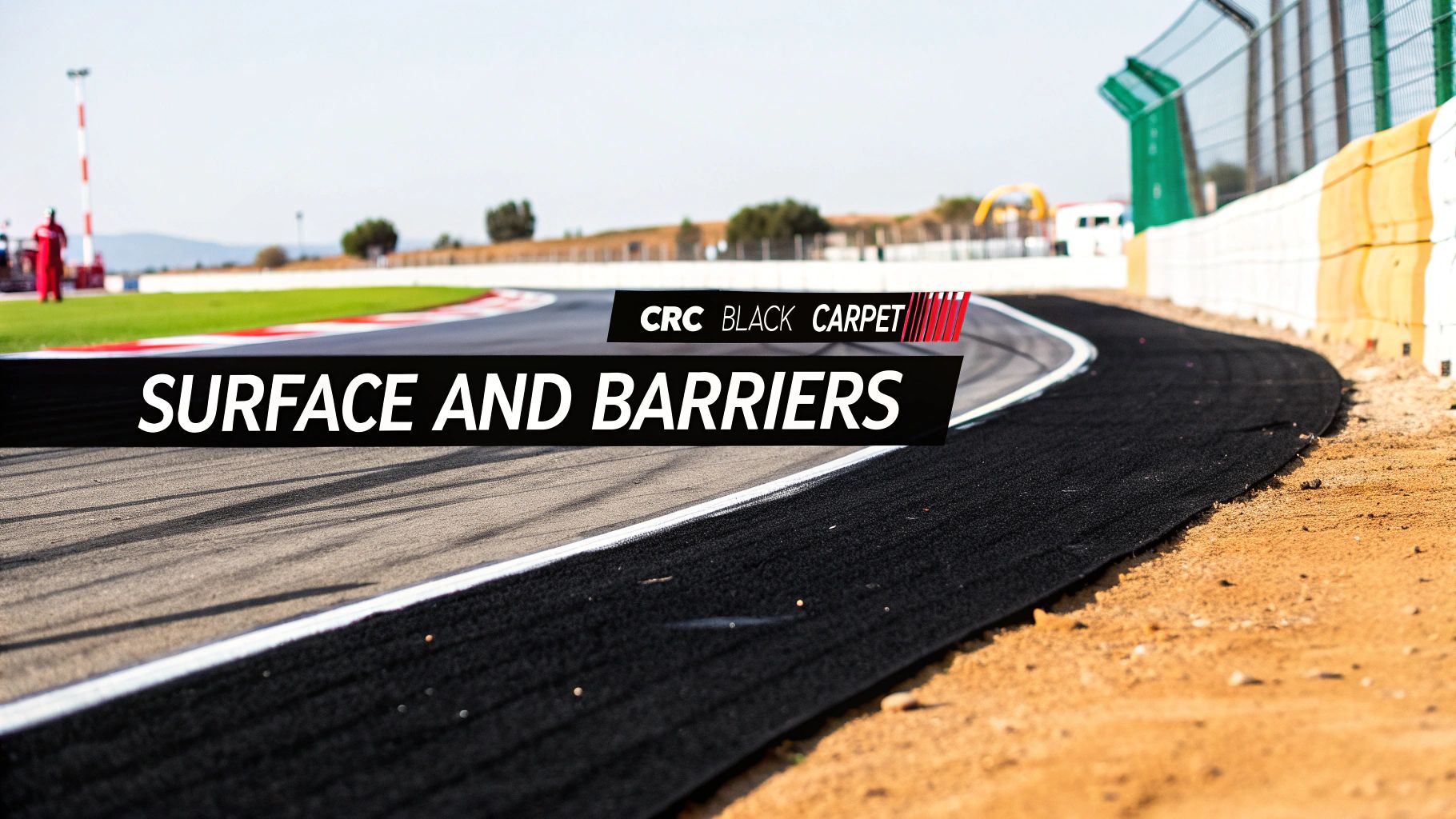
Once your layout is locked in, the next decision is huge: what are the cars actually going to drive on? The track surface is the single biggest factor influencing grip, tire wear, and how a car feels to drive. For serious 1/10 and 1/12 scale on-road racing, a couple of options stand head and shoulders above the rest.
What you choose here sets the tone for everything—your maintenance routine, how racers approach their setups, and even the kind of damage a car takes in a crash. When you pair the right surface with a good barrier system, you create the fundamental character of your RC car tracks, directly impacting driver confidence and the quality of the racing.
The Gold Standard for Indoor Racing: CRC Black Carpet
If you're running a serious indoor on-road program, CRC Black Carpet is the undisputed champion. It's a purpose-built, high-grip surface that delivers a level of consistency you just can't get from regular commercial carpet. The dense, low-pile design is made to work with both foam and rubber tires, building up incredible traction as a groove develops.
The result is blazing-fast, precision racing where car setup and pure driver skill really shine. Because the grip is so high and so predictable, racers can push their cars to the absolute limit. This performance does come with one non-negotiable rule, though: you have to keep it clean. Regular vacuuming is essential to keep dust from killing the traction.
The Outdoor Champion: Prepared Asphalt
When you take the racing outside, a smooth, well-prepared asphalt surface is the way to go. It offers a totally different driving challenge compared to carpet, rewarding a fluid driving style and a car setup that can manage lower grip and surface bumps. The key phrase here is "well-prepared."
A proper asphalt track is sealed to keep it from breaking up and is kept obsessively clean of dust and tiny stones. As cars lay down rubber turn after turn, a natural racing line—the "groove"—forms, offering way more grip than anywhere else on the track. This creates a dynamic that forces drivers to be surgically precise with their lines to find that extra speed.
The surface and barrier system you choose will define the entire racing experience. A forgiving barrier like CRC Fasttrak piping encourages drivers to push harder, knowing a small mistake won't end their race with a broken A-arm. This builds confidence and ultimately leads to closer, more exciting competition.
Choosing the right components is key. When your surface demands maximum performance, you need durable parts that can withstand the forces of high-grip racing. Having access to reliable chassis parts from brands like Awesomatix and XRAY is crucial for keeping racers on the track.
Selecting a Forgiving Barrier System
Just as critical as the surface is the system you use to mark the track's edges. A barrier has two jobs: clearly define the layout and absorb impacts in a way that minimizes damage to expensive RC cars. A rigid, unforgiving wall can turn a minor slip-up into a costly DNF (Did Not Finish).
This is exactly why flexible, modular systems are the overwhelming favourite for clubs and racers. They create a much safer environment for the cars and the corner marshals.
Here are the top choices for modern on-road RC tracks:
- CRC Fasttrak Piping: This is the classic choice. It uses flexible PVC-style pipes held in place with dots or plates. It’s affordable, easy to see, and incredibly forgiving when a car makes contact.
- Click Track Barriers: A more modern, interlocking system, Click Track offers a clean, professional look. The pieces snap together for lightning-fast layout changes, and their design is great at absorbing impact energy.
Both systems are portable, which makes them ideal for temporary tracks in places like community centres or parking lots. Their biggest advantage is that they cut down on car repairs, letting drivers spend more time racing and less time on the pit bench. This is where having a reliable source like digital-rc for any needed spare parts, from pinions to shims, becomes a racer's best friend. A well-chosen barrier protects the investment and keeps the fun in racing.
Equipping Your Track for Flawless Race Days
A great layout and a perfectly prepped surface are the foundation, but it’s the operational equipment that really turns a track into a professional racing venue. Running a smooth, competitive event takes more than just a place to drive; you need the right tools to ensure fairness, clarity, and efficiency from the first qualifier to the final A-Main.
The right gear removes guesswork and lets racers focus on what they came to do: drive. From the dead-on accuracy of lap times to the comfort of the pit area, every piece plays a part in creating a race day that runs like clockwork. This is the stuff you absolutely need if you're serious about hosting top-tier on-road races.
The Heartbeat of Competition: Timing and Scoring
In racing, accuracy is everything. The single most critical piece of equipment for any competitive RC car track is a reliable timing and scoring system. Without one, you’re just turning laps. With one, you’re creating legitimate competition. This system is the undisputed authority on the track, logging every lap down to the thousandth of a second.
The industry standard, hands down, is the AMB/MyLaps transponder system. It’s built around a decoder connected to a wire loop embedded right in the track surface, which picks up signals from personal transponders in each car. When a car crosses that loop, its unique signal is registered, feeding instant, accurate data to the race director. This is the tech behind nearly every major RC race in the world.
Investing in a quality timing system like MyLaps isn't just about getting accurate results; it's about building trust and legitimacy. When racers know their performance is measured with pro-grade equipment, it elevates the entire event.
This is the precision that separates casual club racing from serious competition. To really get into the nuts and bolts, you can check out our deep dive into the MyLaps RC4 transponder and its role in professional lap timing for competitive RC racing—it’s a must-read for any track organizer.
Essential Infrastructure for Racers and Staff
Beyond the high-tech timing loop, a few other pieces of infrastructure are non-negotiable. These are the things that provide visibility, communication, and a proper workspace to keep the race day running smoothly for everyone.
-
A Sturdy Driver's Stand: This is your command centre. A raised platform gives drivers a clear, unobstructed view of the entire circuit, which is absolutely essential for hitting apexes and navigating traffic. Make sure it’s big enough to comfortably fit a full heat of drivers without anyone feeling crowded.
-
Adequate Pit Tables and Power: Racers need a dedicated space to wrench on their cars. Providing sturdy tables and, crucially, accessible power outlets is a must. This lets drivers charge batteries, make solder repairs, and run setup tools without creating a tangled mess of extension cords.
-
A Clear PA System: Good communication is key. A public address system is vital for the race director to announce upcoming heats, call for marshals, and get important info out to everyone. A system that’s clear and easy to hear keeps the program flowing and ensures nobody is left guessing.
Consumables That Keep the Show Running
Finally, a well-run track is always stocked with the essentials that racers burn through on race day. These are the little things that find those last few tenths of a second on the track or save a racer’s day when something goes wrong.
For indoor carpet tracks, traction compound is king. You’ll see products from brands like SXT and Trinity in every serious racer's pit box. Having these available on-site is a massive convenience. It’s also a great idea to have a small supply of essential hand tools for those inevitable last-minute fixes. These items, from "sauce" to precision tools, are the lifeblood of a race day and are always staples at a dedicated on-road shop like digital-rc.
Mastering Track Prep and Race Day Operations
A world-class layout and a perfect surface are only half the battle. Sharp execution on race day is what transforms a good RC car track into a legendary racing venue. This is where meticulous preparation and smooth event management come together, creating an environment where drivers can focus purely on performance.
The difference between a chaotic race day and a flawless one often comes down to the pre-race rituals. These aren't just chores; they're the steps that create maximum, consistent grip and ensure the program runs like clockwork. A smoothly run event is the hallmark of a professional club and makes racers feel their time and entry fees are valued.
Pre-Race Preparation: The Grip Ritual
Creating a high-traction racing surface, especially on CRC Black Carpet, doesn't happen by accident. It all starts with a consistent and thorough cleaning process before the doors even open. The goal is simple: remove any dust or debris that could get between the tires and the track.
A powerful vacuum, preferably one with a beater bar, is your number one tool. It’s essential for pulling up loose carpet fibres, tire dust, and any small debris tracked in from the pit area. For an even deeper clean, some clubs follow up with a walk-behind floor scrubber using only water. This lifts away the fine dust that even the best vacuum can miss.
The single most important rule of track prep is consistency. Whether you use a simple vacuum or a multi-stage cleaning process, doing it the exact same way every race day gives drivers a predictable surface they can confidently set their cars up for.
Applying traction additives is the final, crucial step. On carpet, this is usually a controlled spray of a sugar-water solution or a similar simple syrup mixture. A light, even mist creates a tacky surface that generates immense grip once it dries. The key here is to apply just enough to be effective without creating a sticky mess.
Orchestrating the Perfect Race Day
With the track prepped, the focus shifts to managing the flow of the event itself. A well-defined schedule is your playbook for the day, keeping racers informed and the program moving efficiently. To really nail this down, it’s worth digging into best practices for event execution and operations.
Here’s a simple, proven structure for a typical club race day:
- Open Practice: A set period for racers to get a feel for the track conditions and make final tweaks to their cars.
- Qualifying Rounds: Usually two or three rounds where drivers race the clock to set their fastest time, which determines their starting spot in the mains.
- Sorting Heats: After qualifying, the results are used to sort drivers into main events (A-Main, B-Main, etc.), grouping them with others of similar speed.
- Main Events: The final races that determine the overall winner for the day. These are often longer and more intense than the qualifiers.
This structured approach is a hallmark of successful racing programs everywhere. For example, in the heart of British Columbia, Kamloops has a rich history of hosting major events where precision is everything. Tracks like MacDonald Park have held the ROAR Canadian National Pavement Championships, where a perfectly run program was essential to manage the 150 racers in attendance, all vying for lap records on its demanding asphalt circuit.
This process highlights the key pillars that support a smooth race day operation.
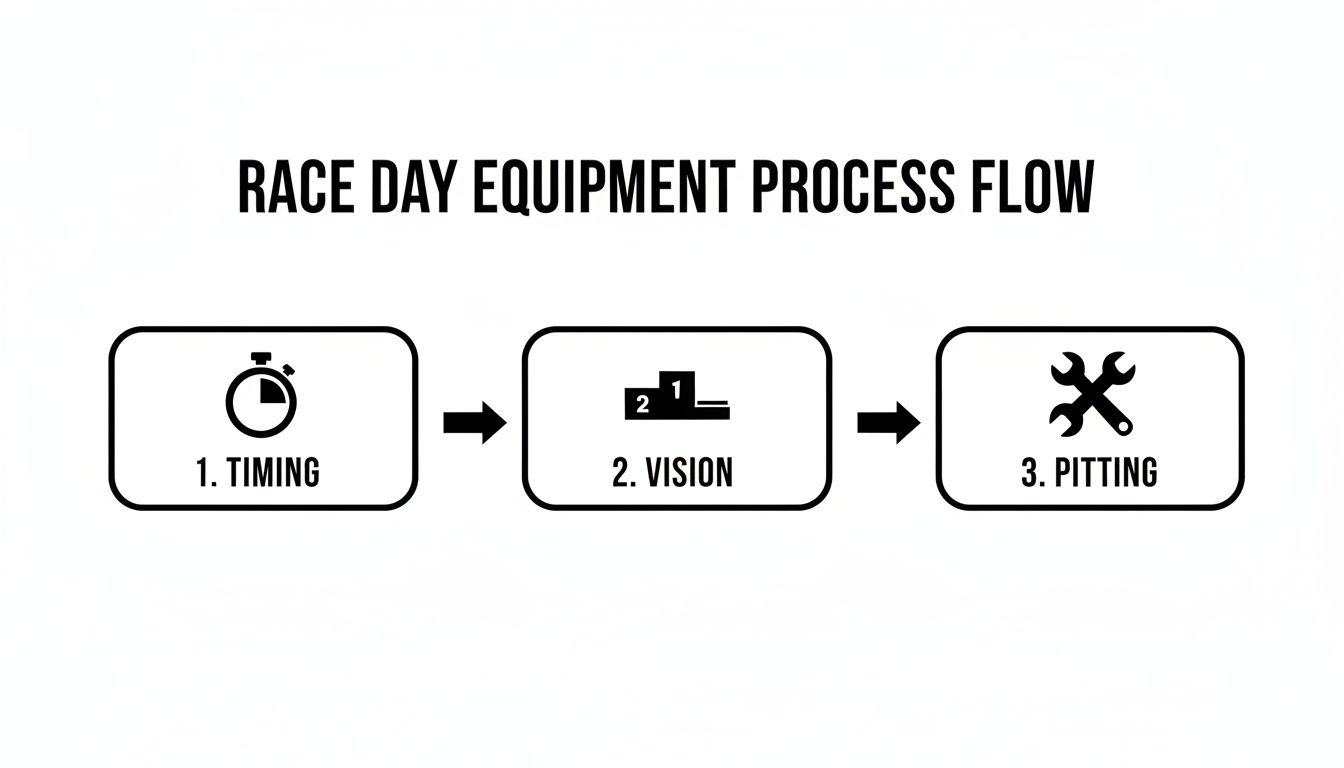
From precise timing to a clear view and a functional pit space, each element is critical for a successful event.
Managing Heats and Marshalling Effectively
Efficiently managing the flow of heats is what keeps the day on track. A good race director is proactive, calling the next heat to the line while the current one is still running. This "heats on deck" system minimizes downtime and keeps the energy high.
Marshalling is the backbone of any RC race. When a driver crashes, a marshal is responsible for safely and quickly returning their car to the track. The universal rule is simple: the drivers in the previous race are the marshals for the current race.
Enforcing this rule is non-negotiable. It ensures fairness and keeps the racing action continuous. A pre-race driver's meeting is the perfect time to clearly explain marshalling duties and designated marshal spots to ensure everyone is on the same page. This collaborative effort allows drivers of high-performance chassis from Awesomatix and XRAY to push their limits, knowing the program is well-organised and supportive.
Setting the Standard for Safety and Sportsmanship
Beyond the thrill of close racing and the hunt for a perfect lap, a truly successful racing program is built on safety and mutual respect. These aren't just polite suggestions; they are the non-negotiable rules that protect people, their expensive equipment, and the long-term health of your racing community. As an organiser, fostering this culture is your most important job.
The conversation about safety at any RC car track has to start with Lithium Polymer (LiPo) batteries. These power packs are the heart of modern RC racing, but they demand absolute respect. Mishandle them, and you're inviting a catastrophic failure—including fires that can destroy gear and endanger everyone in the building.
Mastering LiPo Battery Safety
Every racer needs to understand that LiPo safety is both a personal and a collective responsibility. There is simply no room for shortcuts when it comes to charging.
A quality, name-brand charger isn't a luxury; it's a critical piece of safety equipment. Investing in a reliable charger from a proven brand like Hobbywing or Team Powers is one of the smartest buys a racer can make. These units have sophisticated balancing circuits and safety cutoffs that cheap, unbranded chargers often skip. Using one is your first line of defence against overcharging, a primary cause of LiPo fires.
Every single time a LiPo battery is charged at the track, it must be inside a fire-resistant LiPo sack or a proper metal container. This isn't optional. That simple step can be the difference between a contained incident and a full-blown emergency.
To reinforce these habits, a clear set of rules must be posted and strictly enforced in the pit area. A strong safety culture lets everyone focus on the fun of racing, knowing the right precautions are being taken by all.
LiPo Battery Safety Checklist
This checklist isn't just a list of tips—it's a set of mandatory practices for handling and charging LiPo batteries at your track. Think of it as a quick-reference guide to keeping everyone and their equipment safe.
| Safety Check | Why It's Critical | Recommended Gear (from digital-rc) |
|---|---|---|
| Always Use a LiPo Sack | It contains a potential fire, stopping it from spreading to other equipment or your pit table. | A fire-resistant charging bag is a must-have item for every racer's pit box. |
| Charge on a Fireproof Surface | This provides an extra layer of protection if a battery somehow fails outside its sack. | Never charge on carpet, wood, or directly on your pit towel. Concrete is ideal. |
| Use a Quality Charger | It prevents dangerous overcharging and ensures proper cell balancing, which extends battery life. | Reputable chargers from Hobbywing or Team Powers are ideal choices. |
| Never Leave Charging Unattended | This allows for immediate action if a battery starts to swell, smoke, or vent. | You need to stay within sight and earshot of your charging setup at all times. |
| Inspect Batteries Regularly | A damaged or "puffed" battery is a significant fire risk and must be retired immediately. | Check for swelling, dents, or damaged wires before and after every single run. |
Following these steps is non-negotiable. It's the only way to ensure a safe environment where the focus stays on racing, not on preventable accidents.
On-Track Etiquette and Sportsmanship
With pit safety dialled in, the focus shifts to how we conduct ourselves on the driver's stand and the track. Good sportsmanship is what makes an event fun and competitive instead of frustrating. It all comes down to clear communication and mutual respect.
During qualifying, your goal is to set your own fastest lap. That means slower cars must yield the racing line to faster cars approaching from behind. It's that simple. A clear call of "on your left" or "car back" from the faster driver gives the other racer a heads-up to move aside safely without ruining either of your laps.
Effective marshalling is just as important. When it's your turn to corner marshal, your focus needs to be entirely on your section of the track. A quick response to a crashed car not only helps that driver get back in the race but keeps the track clear and safe for everyone else, ensuring the action continues without unnecessary interruptions.
Common Questions About RC Car Tracks
Even with the best plan in the world, getting a new racing program off the ground comes with a ton of questions. For new organizers and racers alike, getting clear answers can be the difference between a successful launch and a frustrating false start.
We want you to feel confident building a thriving local scene, so we’ve tackled some of the most common queries we hear about setting up and running RC car tracks.
What Is the Ideal Size for a 1/10 Scale On-Road Track?
For 1/10 scale touring cars and 1/12 pan cars, a great starting point for an indoor track is around 20m x 10m (65ft x 33ft). This gives you enough real estate for a technical layout that still has room for a decent straightaway, testing both chassis agility and motor performance.
Permanent outdoor asphalt tracks, on the other hand, often expand to 45m x 20m (150ft x 65ft) or even larger.
Regardless of the overall size, aim for lane widths of at least 2.5-3 metres (8-10 feet). This is the sweet spot that encourages clean, side-by-side racing and helps minimize those race-ending pile-ups. It's all about balancing challenging sections with at least one high-speed straight to test driver skill and car setup equally.
How Much Does It Cost to Build a Basic Club Track?
The investment can vary wildly depending on your ambitions. For a temporary indoor track, your biggest costs are the surface and the barrier system. A roll of CRC Black Carpet—the gold standard for high-grip racing—can run several thousand dollars on its own.
A flexible barrier system like CRC Fasttrak or Click Track might add another $1,000-$3,000 to the budget. For an outdoor track, paving asphalt is the biggest single expense, potentially costing tens of thousands.
On the operational side, you can often find a used AMB/MyLaps timing system for $2,000-$5,000. But here's the good news: a resourceful club using volunteers and securing a low-cost venue can often get a temporary setup going for under $5,000.
What Is the Best Way to Maintain a Carpet Track Surface?
Consistent grip comes from consistent maintenance. The best practice starts with a powerful vacuum, ideally one with a beater bar, to pull up loose fibres, tire dust, and other debris. Some clubs even follow this with a floor scrubber using only water to lift any remaining fine dust.
It's crucial to avoid harsh chemicals. They can damage the carpet fibres or leave behind a slick residue, which completely ruins traction. A clean surface is a fast surface.
A great pro-tip is to set up a designated tire cleaning station. This stops racers from tracking gunk from the pits onto the racing surface, which goes a long way in maintaining grip and extending the carpet's lifespan.
How Do We Attract More Racers to Our New Track?
Building a community is everything. Start by creating a home base online, like a Facebook Group or Discord server, where you can post race schedules, results, and photos. This becomes a central hub for communication and keeps everyone engaged. For more ideas, our guide on finding an RC car track near me has some great tips.
Think about hosting beginner-friendly events with simple, affordable classes to lower the barrier to entry for newcomers. A "try-me" day with a few loaner cars can work wonders.
Most importantly, run a tight, organized program that starts on time and feels welcoming. A positive, fun atmosphere is the ultimate tool for attracting—and keeping—racers for the long haul.
At digital-rc, we are dedicated to supporting the Canadian on-road racing scene with the best high-performance parts and gear. Whether you're building a new club track or dialling in your race car, we have the products and expertise you need to succeed. Explore our curated collections for everything from chassis kits to electronics and setup tools at https://digitalrc.ca.