

rc race tracks: Design, build and optimize your course
An RC track is more than just a place to drive; it's a purpose-built surface designed for competition. Whether you're laying down a temporary course for a weekend event or pouring a permanent asphalt circuit, every surface requires a specific setup to get the most out of today's high-performance cars.
Choosing the Right Foundation for Your RC Track
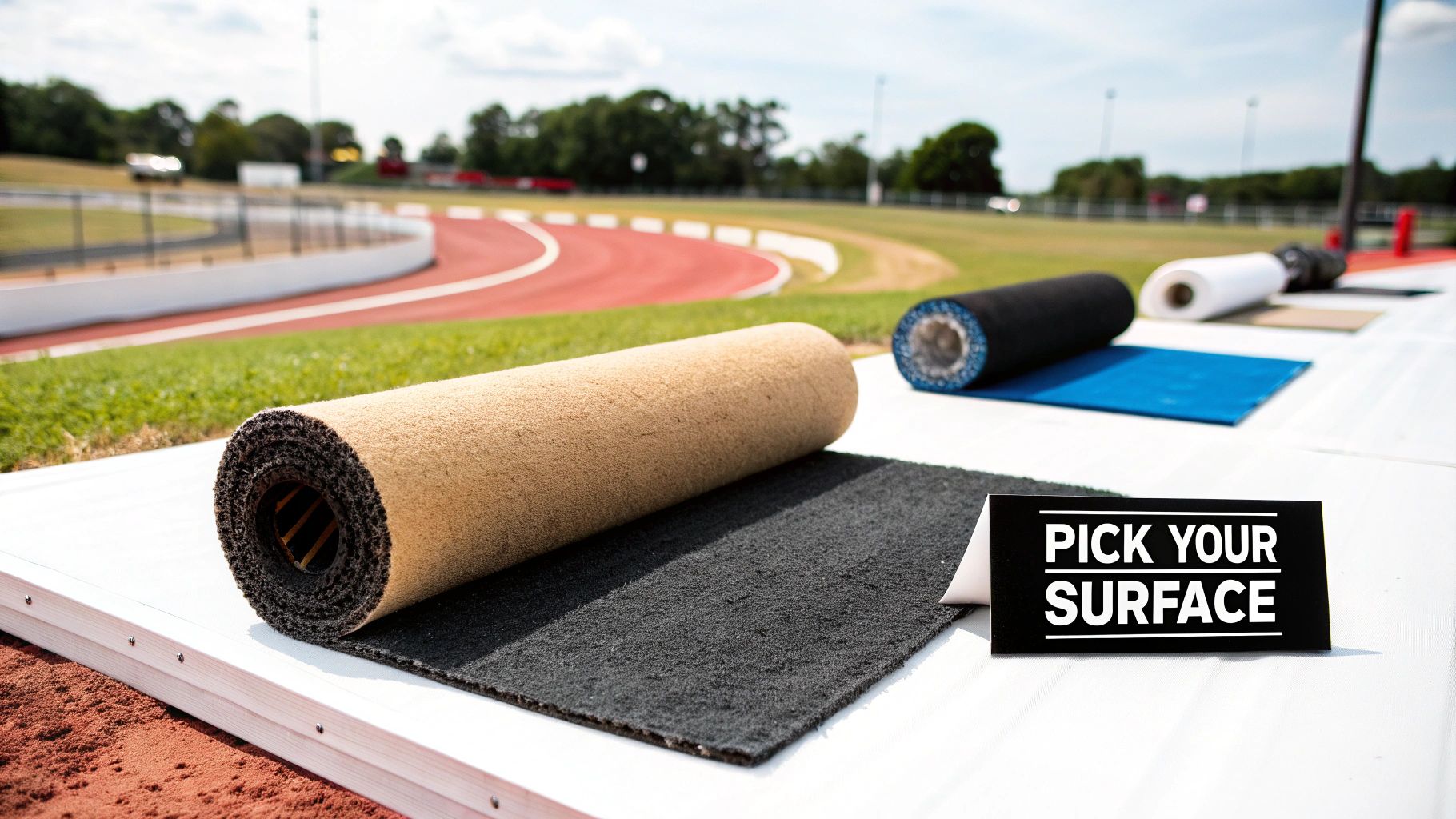
The single most critical decision you'll make is the track surface. It's the foundation for everything. It dictates grip levels, tire wear, and the entire driving feel for every racer who shows up. Every other choice—from the layout to the barriers—flows from this one decision.
Right away, you're faced with a choice: temporary or permanent?
A temporary track, usually made from interlocking carpet tiles or massive rolls, gives you incredible flexibility. This is the go-to solution for clubs that rent space in community halls, school gyms, or convention centres. Being able to set up and tear down a full-size race course in just a few hours is a massive advantage.
Permanent tracks, on the other hand, are a serious investment in both time and money. These are typically built from asphalt or specially treated concrete and are found at dedicated RC facilities. What you get in return is the most consistent racing environment possible, free from the variables that pop up with a temporary setup.
This quick decision tree sums up the core choice between a temporary carpet setup and a permanent asphalt foundation.
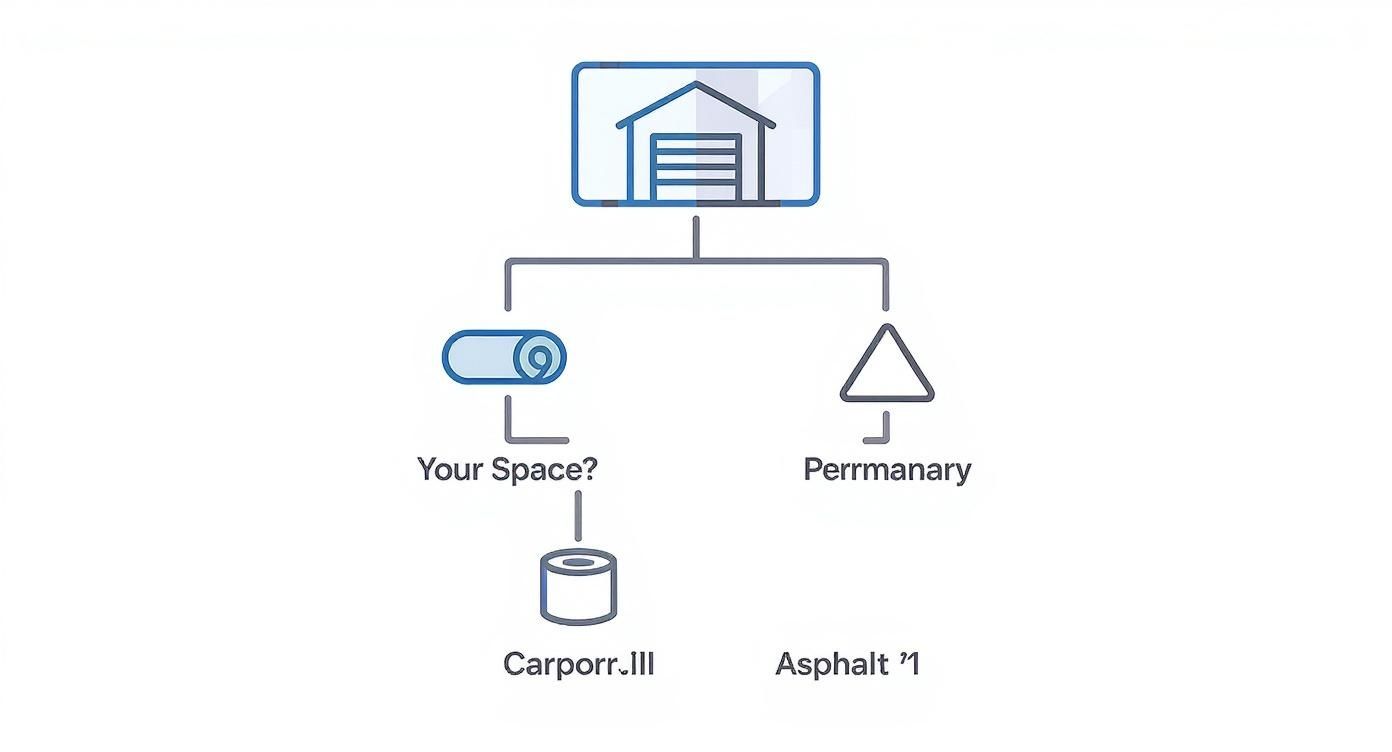
As the diagram shows, the nature of your venue—whether it’s a shared indoor space or a dedicated outdoor lot—is what will really steer you toward a portable or fixed track surface.
Comparing Popular On-Road Surfaces
For competitive 1/10 touring and 1/12 pan car racing, the scene is dominated by three surfaces: CRC Black Carpet, ETS Carpet, and asphalt. Each one brings its own unique character to the table, and your choice will define the racing style at your track.
A head-to-head look at these surfaces makes it easier to see where your club might fit.
On-Road RC Track Surface Comparison
| Surface Type | Initial Grip Level | Maintenance Needs | Typical Lifespan | Best For |
|---|---|---|---|---|
| CRC Black Carpet | Very High | Frequent vacuuming, requires grip additive control. | 2-4 years | 1/12 Pan Cars, high-level Touring Car racing. |
| ETS Carpet | Medium-High | Regular vacuuming, consistent surface prep. | 3-5 years | Most electric on-road classes, spec racing. |
| Asphalt | Low to Medium | Sweeping, crack repair, occasional resealing. | 10+ years | Electric and nitro classes, large permanent facilities. |
Choosing a surface is about more than just feel; it directly impacts your club's "spec tire" and setup norms, creating a level playing field for everyone.
Here’s a closer look at what to expect from each:
CRC Black Carpet is legendary for its insane grip levels. Racers often say it "hooks up" almost instantly, which makes for blisteringly fast lap times. The catch? It demands a perfect car setup to keep from traction rolling.
ETS (Euro Touring Series) Carpet delivers a more manageable medium-to-high grip. It’s known for being more consistent and a little more forgiving than black carpet, which is why you see it used at so many major international events.
And then there's asphalt, the classic on-road feel. Grip is generally lower than carpet and can change a lot with the weather and how clean the track is. But it’s incredibly durable and the only real choice for permanent outdoor facilities that need to accommodate both electric and nitro racing.
A key takeaway for track organizers: your surface choice directly dictates the "spec tire" for your club. A soft, grippy tire that's a dream on asphalt will be completely useless on high-bite black carpet. This decision standardizes the biggest variable for all racers.
Critical Site Selection Factors
Before you lay down a single tile or pour a bucket of asphalt, you need to evaluate your site properly. Getting this wrong leads to endless headaches and inconsistent racing that will drive your members away. A great venue is about more than just a flat piece of ground.
When scouting a location, keep these non-negotiables in mind:
- Available Space: You need enough room for more than just the track. Think pit tables, a solid driver's stand, and safe walkways. For a competitive indoor track, a footprint of around 24 by 12 metres is a common starting point.
- Power Access: Racers need juice—and lots of it. Battery chargers, tire warmers, and tools all require power. A venue with spotty or insufficient outlets is a recipe for a logistical nightmare.
- Stable Ambient Temperature: This is a game-changer. A climate-controlled indoor space keeps grip levels from swinging wildly, which makes for better, more consistent racing. For outdoor asphalt tracks, finding a spot with some shade and wind protection is a huge plus.
- Lighting Quality: Bright, even lighting with no harsh shadows is essential. You can’t have drivers struggling to hit their apexes or marshals squinting to find crashed cars. It’s both a safety issue and a fairness issue.
Designing a Track Layout That Challenges Drivers
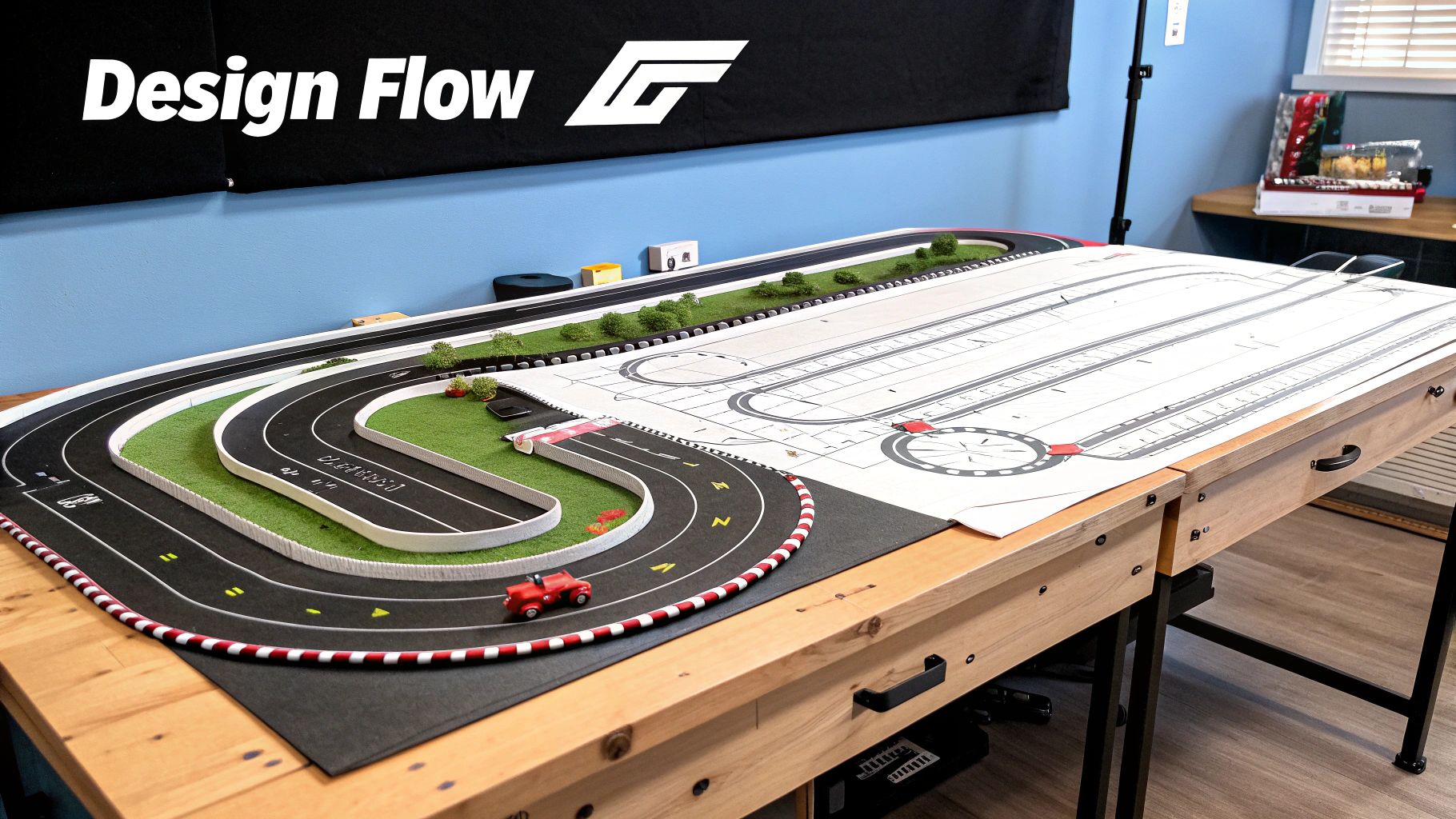
A fantastic surface is only half the battle. The layout is what really transforms a simple course into a legendary circuit that drivers look forward to racing on. A truly great RC track is a puzzle, one that rewards skilled driving and smart strategy over pure horsepower.
The goal is to create a layout with a natural rhythm—a flow that feels both challenging and rewarding. It’s all about balancing different elements to create a dynamic experience. The best designs keep seasoned experts engaged while still being approachable for newcomers. This means strategically blending high-speed sections with technical, low-speed corners to test every aspect of a driver's ability and their car's setup.
The Core Elements of a Great Layout
A memorable track is a composition of different corner types. Each one serves a specific purpose, and the way you sequence them dictates the track's entire personality. Think of it as a conversation between the driver and the course.
Here are the essential building blocks you'll want to work with:
- Fast Sweepers: These are your large-radius, high-speed corners that test a car's stability and a driver's nerve. They are absolutely crucial for creating a sense of speed and flow.
- Technical Hairpins: A tight, 180-degree corner that forces heavy braking on entry and precise acceleration on exit. Dropping a hairpin at the end of a long straight is a classic move that always creates passing opportunities.
- Chicanes: Quick left-right or right-left combinations that break up long straights. Chicanes are perfect for testing a car's agility and a driver's reaction time.
- Challenging Infields: This is the slower, more intricate part of the track, often a series of connected corners. A well-designed infield really separates the skilled drivers by rewarding a smooth, consistent racing line.
By mixing these elements, you force racers to think about braking points, corner entry, and exit speed. It turns every lap into a strategic challenge, which is exactly what you want.
Shaping the Track with Modern Barriers
Modern barrier systems do more than just keep cars on the track; they are a fundamental tool for defining the racing line and shaping your circuit’s character. Systems like the CRC Click-Trak or similar modular barriers allow for precise, repeatable layouts every single time.
The key is to use the barriers to create clear apexes and corner exits. This visual guidance helps drivers learn the fastest way around. For example, a slightly wider entry into a corner followed by a tighter apex can create a challenging but fair sequence that’s fun to master.
A common mistake is creating layouts with inconsistent or ambiguous corners. Use your barrier system to provide clear visual cues that guide drivers along the optimal racing line. This consistency is what builds driver confidence and encourages cleaner, faster racing.
Lane width is another critical detail. For 1/10 scale touring cars, a good starting point is a lane width of about 2.5 to 3 metres. This gives drivers enough room for clean, side-by-side racing without making the track feel so wide that it becomes unchallenging.
Finding Inspiration from Real-World Tracks
Looking at established RC race tracks is one of the best ways to get ideas. The RC racing community is vibrant, especially in motorsport hubs. For instance, California's on-road scene features numerous facilities that host competitive events. Tracks like the Southern California On-Road RC Raceway showcase layouts that have been refined over years of competition.
You can see how they blend technical sections with fast straights to create a balanced challenge. If you want to dig deeper, you can even explore the history of America's speedways to see how these racing cultures develop over time.
Ultimately, the best layouts are the ones that evolve. Don't be afraid to tweak a corner radius or change the angle of a chicane based on driver feedback. The goal is a continuous process of refinement—always striving to create that perfect puzzle that drivers will be excited to solve week after week.
Setting Up Essential Track Infrastructure
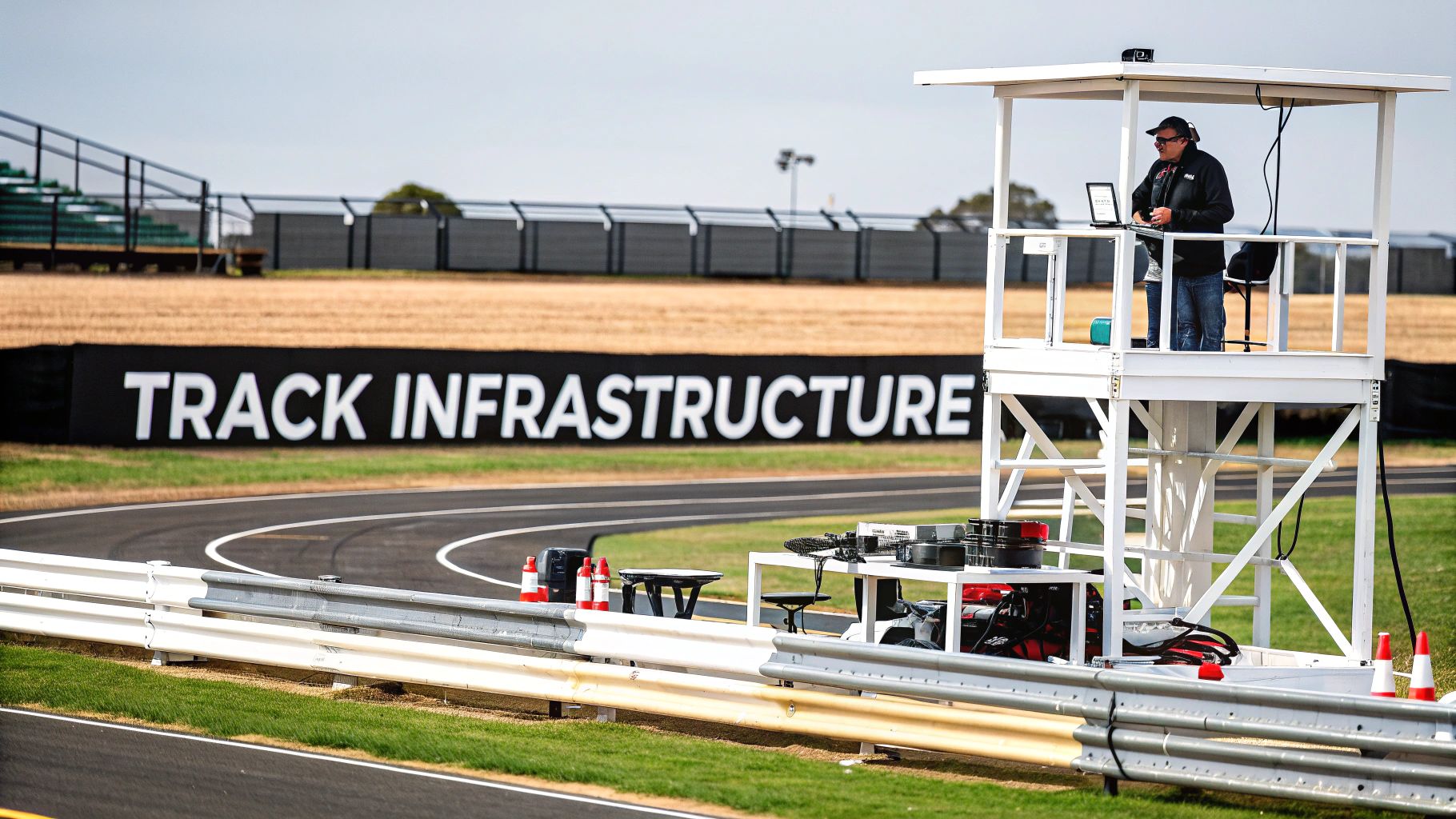
Once you've nailed down a challenging layout, it's time to shift focus to the hardware that turns an empty space into a proper racing venue. These are the non-negotiables: a well-designed driver's stand, a rock-solid timing system, and a functional pit area.
This is the operational backbone that separates a casual practice spot from a serious competitive facility. Get these details wrong, and you're looking at frustrated racers, disputed results, and disorganized, chaotic race days.
The Driver's Stand: Sightlines and Safety
The driver's stand is the command centre during a race. Its design and placement are absolutely critical for fair competition, and the number one goal is simple: give every single driver a clear, unobstructed view of the entire track.
A common mistake is building a stand that’s too low. You want to aim for a height of 2 to 2.5 metres. This gets drivers above ground-level clutter and minimizes perspective distortion, making it far easier to judge distances and nail those apexes on the far side of the track.
Safety is just as important. Make sure the stand has sturdy railings, non-slip steps, and plenty of room for drivers to stand without bumping elbows. Overlooking these basics is a recipe for a bad day.
Installing a Reliable Lap Timing System
Accurate lap timing is the heart and soul of competitive RC racing. Modern systems work with a decoder that reads signals from a personal transponder mounted in each car. The signal gets picked up by a detection loop you embed right into the track surface at the start/finish line.
Installing this loop takes a bit of planning. On carpet, the wire is usually taped down securely underneath the racing surface. For asphalt, you’ll need to cut a shallow channel, lay the wire inside, and then seal the groove.
A well-installed timing loop is invisible but essential. Ensure the wire is perfectly flat and secure; any bumps or loose sections can interfere with the low-slung chassis of 1/12 scale pan cars and create an unfair obstacle on the racing line.
The decoder then crunches the signal data and feeds it to your race management software, letting you track lap times, positions, and overall results with pinpoint accuracy. Racers need their own personal transponder, with popular options like the MyLaps RC4 Transponder being a standard at most tracks.
Organizing a Functional Pit Area
The pit area is where all the work happens between heats—racers are wrenching, tuning, and making repairs. A messy, disorganized pit space just creates stress and chaos. A well-planned area gives every participant what they need to stay competitive all day long.
Your pit area absolutely must provide these essentials:
- Adequate Space: Every racer needs enough table space for their car, tools, and charger. A spot around 1.2 metres wide per person is a generous standard that racers will definitely appreciate.
- Sufficient Power: Modern RC racing is power-hungry. You need multiple outlets per racer for chargers, tire warmers, and soldering irons. Don't skimp here—use heavy-duty power bars and extension cords to avoid tripping breakers.
- Good Lighting: Clear, bright light over the pit tables is critical for detailed setup work and quick repairs. Trying to find a tiny E-clip in poor light is no one's idea of fun.
Beyond the basics, think about the flow of the room. Create clear walkways and maybe even set up designated areas for tire saucing. It’s these small details that improve efficiency and safety, contributing to a more professional and enjoyable event for everyone involved.
Mastering Track Prep for Maximum Grip
A perfectly designed layout means nothing if the grip is inconsistent. Getting the surface right is the secret ingredient that transforms a good track into a great one, giving every racer the confidence to push their car to its absolute limit, lap after lap.
This whole process starts long before the first car even touches the surface. Whether you're dealing with carpet or asphalt, the goal is always the same: create a clean, uniform surface that lets traction build predictably all day long.
Initial Surface Cleaning and Debris Control
For indoor carpet rc race tracks, the main enemy is fine dust and fluff. These tiny particles get ground into the carpet fibres by the tires, killing grip in a hurry. The only real weapon you have is a powerful shop vacuum with a wide floor attachment.
Before anyone starts running, the entire surface needs a slow, meticulous vacuuming. Make sure to hit the corners and the areas just off the main racing line, because that's where cars tend to pick up the most debris. For bigger events, it's a good idea to run the vacuum between rounds to keep things consistent.
Outdoor asphalt tracks throw a different set of challenges at you. Dust, tiny pebbles, and leaves are what you’ll be fighting.
- Initial Sweep: Start with a wide push broom to get all the bigger stuff out of the way.
- Final Blow: Follow that up with a powerful leaf blower. Work from one end of the track to the other to clear off all the remaining fine dust. This step is absolutely critical for consistent grip.
Keeping dust under control is an ongoing battle, especially on windy days. Some track operators will even lightly mist the off-track areas with water to keep dust from blowing back onto the racing surface.
The Art of Grooving in the Racing Line
This is where track prep shifts from cleaning to strategy. The goal is to lay down a "groove"—a thin, sticky layer of traction compound right on the ideal racing line. This gives drivers a visible target to hit and rewards a clean, consistent lap with more grip and faster times.
The most common way to do this is with a simple sugar and water solution. A typical mixture is about 1 part sugar to 10 parts warm water, mixed in a garden-style pressure sprayer. The sugar adds just enough tackiness to grab the rubber tires without making the surface a sticky mess.
A classic mistake is putting down way too much spray. All you need is a very light, even mist. The goal is a slightly tacky feel, not a syrupy mess that will gum up every chassis and bearing that touches it. The surface should be dry within a few minutes.
Applying the groove means walking the track with the sprayer. You’ll want to spray a path about 60-90 cm wide, tracing the fastest line through every corner and straightaway. This usually gets done a few times before the event starts and sometimes gets a light touch-up between rounds to maintain it. For a perfect application every time, it helps to use a quality applicator like this tire grip bottle, which is designed for precise use.
Managing Evolving Grip Levels
No track surface stays the same throughout the day. As more cars lay down rubber from their tires, the grip level naturally increases. We call this the track "rubbering in," and adapting to it is part of the challenge and fun of racing.
As a race director, your job is to manage this evolution. If the grip comes up too quickly, cars will start to traction roll. If it doesn't build enough, they'll feel loose and unpredictable. Consistent, light application of your sugar water solution helps control this, ensuring the track remains fair and challenging from the first qualifier to the A-main.
Communication is key here. Letting the racers know how the track is feeling helps them make the right setup adjustments to stay on top of the changing conditions.
How to Run a Flawless Race Day Event
Building an incredible RC race track is a massive achievement, but it's only half the battle. The real magic happens on race day. Running a smooth, organized, and genuinely fun event is what builds a loyal community and keeps racers coming back week after week.
A flawless event doesn’t happen by accident; it’s the direct result of meticulous planning and clear, consistent communication. The work begins long before the first battery is charged, setting the stage for a day where the only thing on anyone's mind is tight, competitive racing.
Pre-Race Preparations and Communication
Success on race day really starts the week before. Your first job is to get a simple and effective registration process in place. Online platforms are your best friend here—they let you collect entries and fees ahead of time, which dramatically speeds up the check-in process on the morning of the race.
Once registration closes, you can generate the heat sheets. This is the schedule that tells every single driver which race they're in and when they're up. Posting these online at least a day in advance is a huge courtesy that racers truly appreciate. It lets them plan their day, prep their equipment, and walk in the door knowing exactly what to expect.
Clear communication is your most powerful tool. Use your club’s social media pages or email list to get all the critical info out there:
- The Day's Schedule: Clearly list times for doors opening, controlled practice, when qualifiers start, and an estimate for when the mains will begin.
- Class Rules: A quick reminder of the rules for each class (e.g., motor limits, battery voltage, weight requirements) helps prevent headaches at tech inspection.
- Tire Sauce Policy: Be absolutely explicit about which traction additives are allowed. This ensures a level playing field and protects your track surface.
This kind of proactive communication minimizes surprises and makes sure everyone arrives prepared and ready to get on the track.
The Race Day Timeline and Flow
A typical club race day follows a structured timeline designed to maximize track time and keep the program moving efficiently. It almost always kicks off with a period of controlled practice, giving drivers a chance to get a feel for the day's grip levels and make those last-minute setup tweaks.
After practice, the qualifying rounds begin. Most club races run 2 or 3 rounds of qualifying, using each driver's best performance—either by fastest single lap or total laps in a set time—to sort them into the main events. This is the heart of the competition, where everyone is pushing for that one perfect run.
The single most important element for a smooth program is efficient turn marshalling. A delayed start to a heat because a marshal is missing can throw the entire schedule off. A mandatory, clearly announced marshalling assignment after each race is non-negotiable.
The day culminates in the main events, often called "the mains." Drivers are sorted into finals (A-Main, B-Main, C-Main, and so on) based on their qualifying results. This format is fantastic because it ensures every driver gets to compete in a final against others of a similar pace, making for exciting battles all the way down the roster.
Post-Race Procedures That Matter
The event isn't over when the final tone sounds. What you do immediately after the racing concludes leaves a lasting impression. The first priority is to post the final results as quickly as possible. Modern race management software can do this almost instantly, so get them printed and posted in the pit area without delay.
Finally, a podium ceremony is a fantastic way to cap off the day. Celebrating the top finishers with a quick photo and some applause acknowledges their achievement and fosters a positive, competitive atmosphere. It’s these small touches that make your rc race tracks feel like a professional and rewarding place to compete.
For those looking for more venues to race at, exploring a directory can help you find an rc car track near me and experience different event styles.
Common Questions About Building RC Race Tracks
Whether you're laying out your first temporary track in a parking lot or fine-tuning a permanent club facility, a few questions always seem to pop up. Getting these details right from the start can save you a ton of headaches and help create a track that racers genuinely enjoy driving on.
Let's tackle some of the most common ones we hear from clubs and enthusiasts.
What Is the Best Budget-Friendly Barrier?
You don't need a pro-level interlocking system to get started. For most temporary or club tracks, one of the best and most cost-effective barriers is repurposed fire hose. It's surprisingly heavy, so it stays put, but it’s also flexible enough to shape smooth corners and soft enough to prevent serious damage when a driver runs out of talent.
Another solid low-cost option is PVC piping. On its own, it’s too light and will get punted all over the place. The trick is to either weigh it down with sandbags or build simple wooden braces to hold it securely.
- Fire Hose: Incredibly durable and flexible. Check with local fire departments—they often have old sections they're willing to give away or sell cheaply.
- Secured PVC Piping: Cheap and easy to find, but you must anchor it properly to keep the layout consistent.
The goal isn't just to mark the track but to create a predictable boundary that can take a few hits without moving the racing line. Both of these options do that job perfectly without blowing the budget.
How Often Should a Carpet Track Be Cleaned?
Consistent grip on a carpet track is all about keeping it clean. How often you need to do it really depends on how much it’s used, but having a solid cleaning routine is non-negotiable for competitive racing. A surface loaded with dust and debris makes even the best car setup feel loose and unpredictable.
For a weekly club race, give the track a thorough vacuuming right before the event kicks off. If you've got a big turnout, running the vacuum again between qualifying and the mains can make a huge difference in keeping grip levels consistent for everyone.
A track's condition is a direct reflection of its management. For permanent facilities with daily practice, a daily vacuuming schedule is the standard. This stops the buildup of tire dust and carpet fibres that will absolutely change how the surface feels over time.
What Are the Biggest Mistakes in Track Layout Design?
A bad layout can kill the fun, no matter how nice the surface is. Even experienced track builders can fall into a few common traps that lead to frustrating, crash-filled races.
Here are the biggest design flaws we see all the time:
- Poor Driver Stand Visibility: This is the cardinal sin. If a driver can't clearly see a corner from the stand, they can't race it properly. Always design your layout with the driver's perspective as the top priority.
- Awkward Corner Radiuses: Corners need to have a natural, predictable flow. A turn that tightens up unexpectedly or has a weird, inconsistent radius feels clumsy and quickly becomes a pile-up zone.
- Inconsistent Lane Widths: Nothing is more frustrating than a track that suddenly narrows in a key section, choking off passing lanes and creating a bottleneck. Stick to a consistent lane width of 2.5 to 3 metres for 1/10 scale cars.
Avoiding these mistakes comes down to one thing: prioritizing the driver's experience. A great layout is challenging but fair, with clear sightlines and a logical flow that rewards a good line. Experience in this field is key, much like it is in other electric hobbies like slot car racing, which once thrived in California. By the mid-1960s, there were over 3,000 public slot car tracks in the U.S. alone. While that number has dropped, a passionate community remains. You can read more about the vibrant history of California's slot car scene on latimes.com.
Whether you're sourcing parts for a club build or upgrading your personal race car, digital-rc offers a curated selection of premium components for competitive on-road racing. Find everything you need, from electronics to chassis parts, with fast, tax-free shipping across Canada at https://digitalrc.ca.
Article created using Outrank