

Your Essential Guide to the LiPo Battery Safety Bag
A lipo battery safety bag is a purpose-built, fire-resistant container designed to give you a fighting chance if a LiPo battery lets go. For any serious RC racer, these aren't just a good idea—they're a mandatory piece of safety gear. They are specifically engineered to contain the intense heat and violent flames that happen during a catastrophic battery failure, a process known as thermal runaway.
Why a LiPo Bag Is Non-Negotiable for RC Racers
The same incredible power density that lets your Awesomatix or XRAY touring car blitz down the main straight also makes LiPo batteries incredibly volatile. It helps to think of a LiPo less like a simple battery and more like a tiny, high-performance engine. And just like any engine, it needs specialized care to prevent a complete meltdown that can destroy thousands of dollars in equipment in seconds.
The core of this risk is a nasty chain reaction called thermal runaway. This can be triggered by almost anything—a tiny internal manufacturing flaw, physical damage from a hard crash, or accidentally overcharging. Once it kicks off, a single damaged cell generates a huge amount of heat, which then causes the cells next to it to fail in a violent domino effect. The result is a sudden, explosive release of fire, toxic fumes, and molten metal. It happens fast.
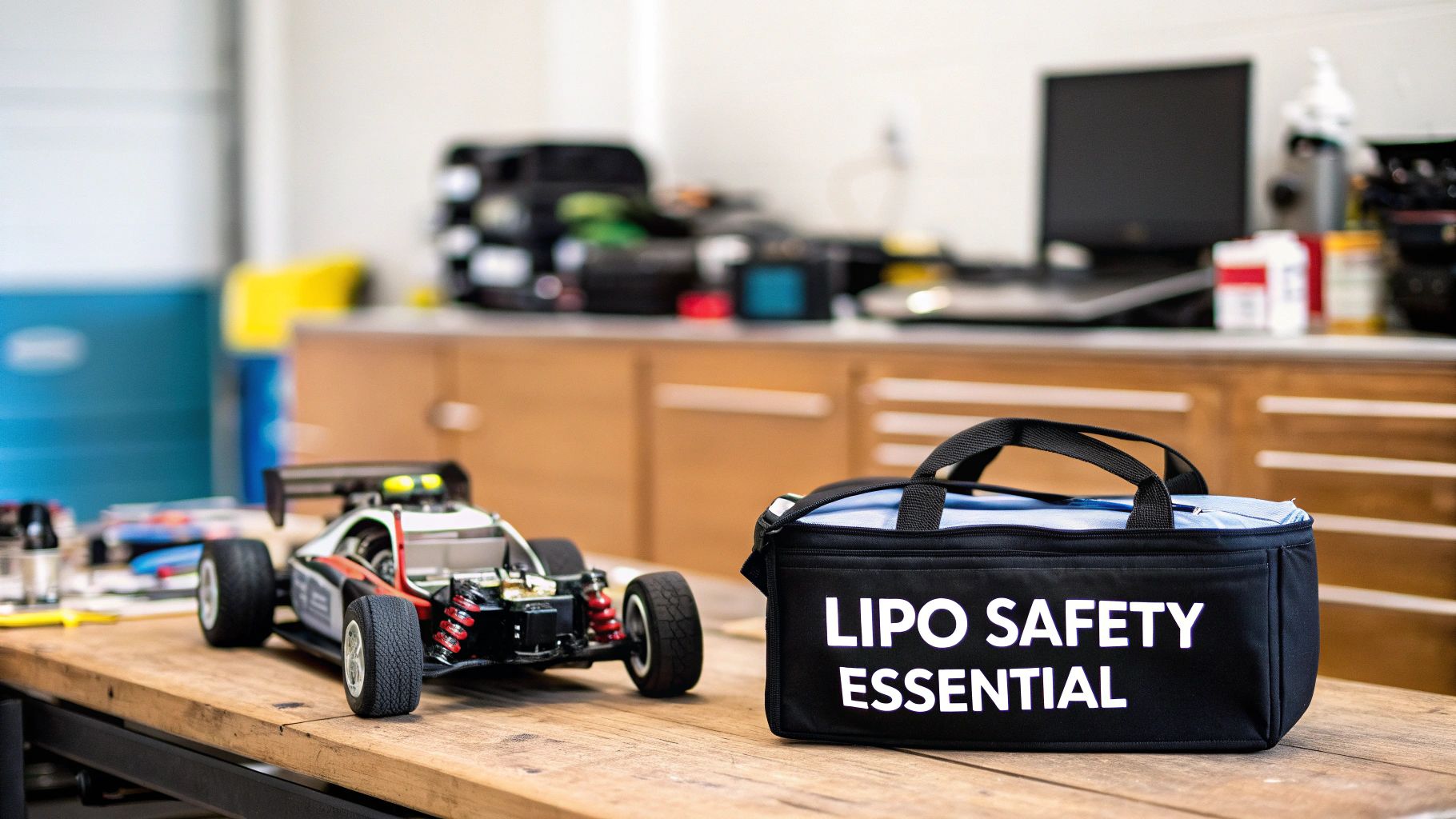
Protecting Your Investment and the Hobby
Every RC racer, from a casual club night to a national-level event, has to put LiPo safety first. One battery fire in the pits can have devastating results, wiping out not just your own car and gear, but the equipment of fellow racers and even damaging the track facility itself.
A lipo battery safety bag is your most important defence against this threat. It’s designed to be a containment vessel, buying you critical time to react and manage the situation safely. Using one isn't just about following the rules; it's about being a responsible part of the hobby and protecting your investment.
Think about what's really at stake:
- Your Gear: A runaway LiPo can instantly melt your chassis and destroy expensive electronics like your ESC, motor, and servos.
- The Venue: A fire in the pits can cause real damage to the facility, putting future race events at risk and hurting the club's reputation.
- Personal Safety: A contained fire is a manageable problem. An uncontained one is a serious safety hazard for you and everyone around you.
In the high-stakes world of competitive RC racing, where every component is pushed to its absolute limit, a LiPo safety bag is non-negotiable. It’s the cheapest and most effective insurance policy you can buy for your multi-thousand-dollar racing setup.
By making a small investment in a quality lipo battery safety bag, you're actively protecting your gear, your friends in the pits, and the hobby we all love. It's a simple, professional step that helps keep race day safe and fun for everyone. This basic precaution ensures the only thing heating up is the on-track competition.
How a LiPo Safety Bag Actually Works
A LiPo safety bag is way more than just a simple pouch; it's a purpose-built containment system designed for a specific, violent event. Think of it less as a bag and more as a personal, portable firefighter's blanket for your batteries. These things are made from specialized, multi-layered materials, usually featuring fire-resistant, fibreglass-reinforced fabrics. This is the same type of stuff trusted in high-heat industrial applications and serious protective gear.
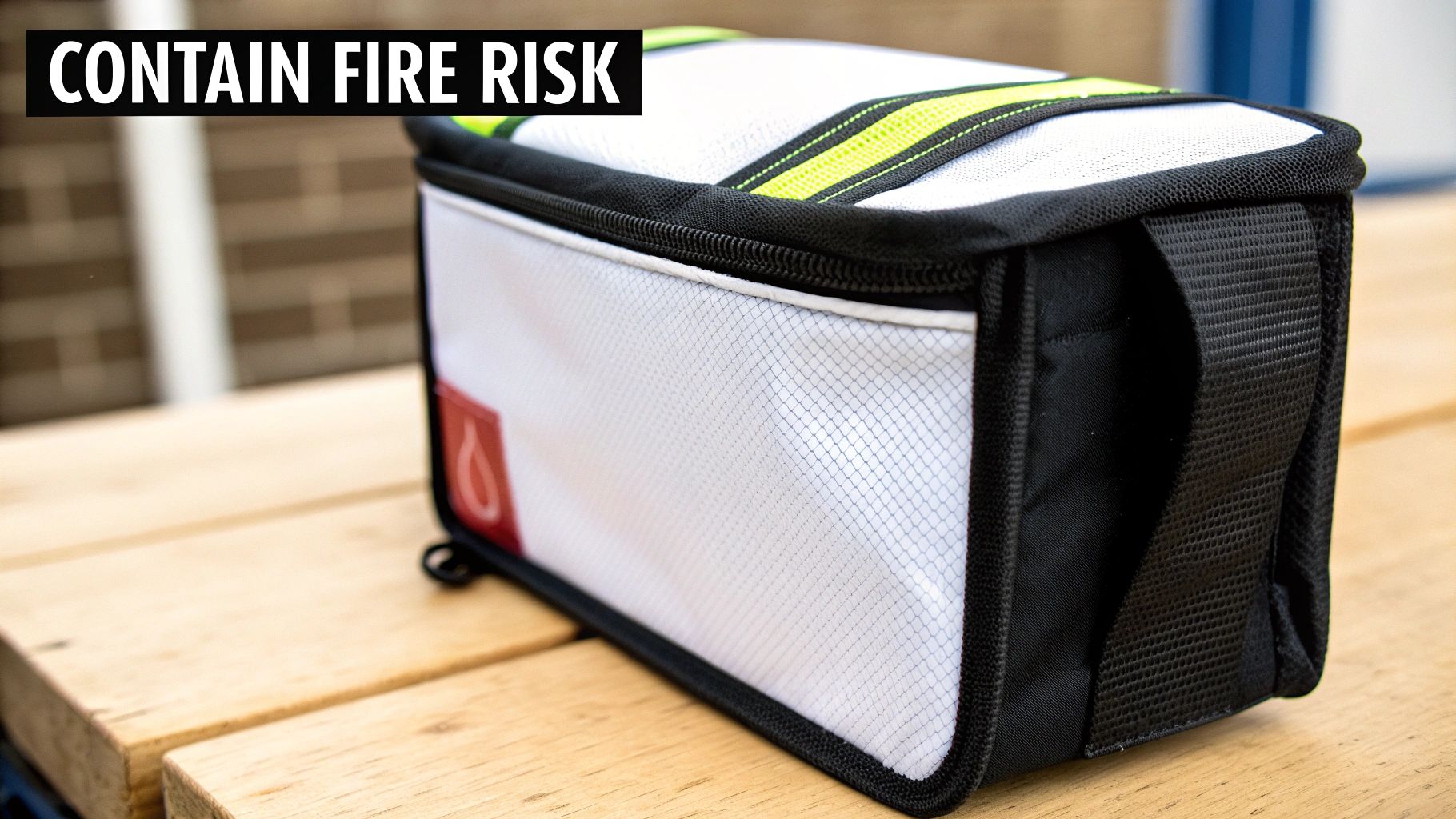
The real magic of a quality LiPo bag is how it manages a thermal runaway. Instead of trying to completely smother the fire—which would just cause a dangerous pressure buildup—the bag is engineered to contain the initial blast of flames while venting the hot gases in a controlled way.
The weave of the fibreglass fabric is tight enough to stop the flames and molten junk from flying out, but it lets the smoke and pressure bleed out slowly through the seams. This is what keeps the bag from popping like a balloon, turning a potential explosion into a much more manageable (though still very serious) fire.
This controlled venting is what gives you those precious seconds to kill the power to the charger, grab the contained bag, and get it outside onto the concrete, away from anything flammable.
Core Components of an Effective Bag
Look, not all bags are created equal. When you’re trusting a product to save your expensive gear—or your house—you need to know what it's made of. At Digital-RC, we only stock bags like the Team Power-Racing LiPo Safety Bag, which has the features that actually matter when things go wrong.
A high-quality LiPo battery safety bag will always have:
- Robust Closures: You need a strong, wide hook-and-loop flap. This creates a secure seal that can handle the initial pressure wave from a battery failure but still allows gases to vent out the seams like they're supposed to.
- Reinforced Stitching: The seams are always the weakest point. Good bags use heavy-duty, fire-retardant thread to make sure the bag doesn’t just split open under the extreme heat and pressure.
- Durable Materials: The bag itself should feel thick and substantial, not flimsy. The inner and outer layers of woven fibreglass are what do the real work of resisting the fire.
The point of a LiPo safety bag isn't to be completely "fireproof"—it's to be fire-resistant. Its job is to manage and contain the initial, most violent phase of a battery failure, turning a catastrophic explosion into a contained incident you can actually deal with.
Choosing the Right Type for Your Needs
The kind of LiPo bag you need really depends on your routine. On our site, you’ll find options designed for the different situations we all run into in RC racing, from charging at home to a busy day at the track.
For charging at home, a larger charging "bunker" or a box-style bag is a great choice. It gives you a stable platform that can hold a couple of batteries securely (remember, charge them one at a time).
For trackside use, a more compact pouch-style bag, like the Team Power-Racing model, is usually more practical. These are perfect for protecting a single 1S or 2S battery during a quick charge in the pits, and they don't take up a ton of space in your hauler bag.
Ultimately, it’s about having the right tool for the job. A small pouch is great for individual packs on the go, while a bigger bag gives you a dedicated, safe charging station in your workshop. Once you understand how these simple products work, you can really appreciate the critical protection they offer your gear.
Choosing the Right LiPo Safety Bag for Your Gear
Picking the right LiPo battery safety bag isn't about grabbing the most expensive one off the shelf. It’s about matching the right features to what you actually need. A poorly made or ill-fitting bag gives you a false sense of security, which is arguably more dangerous than having no bag at all. The decision really comes down to three things: size, material quality, and how it’s put together.
Getting the size right is your first and most critical step. If the bag is too big, your battery will slide around, risking physical damage. If it's too small, it can't properly contain a battery failure. You're looking for a snug fit with just enough wiggle room to account for potential swelling—a classic warning sign that a battery is in trouble.
For RC racers, this means getting a bag that fits your specific battery arsenal. Whether you’re running a standard 2S LiPo in your 1/10 touring car or a slim 1S pack in a 1/12 pan car, the bag needs to hold it securely without putting stress on the seams or the closure flap.
Evaluating Material Quality and Construction
Beyond the fit, the quality of the materials and the overall construction are what separate a reliable bag from a cheap imitation. A proper lipo battery safety bag is made from fire-resistant, fibreglass-based fabrics. When you hold one, it should feel tough and substantial, not thin and flimsy.
The small details are what really tell the story.
- Stitching: Look for heavy, reinforced stitching on all the seams. This is what keeps the bag from bursting open under the intense pressure of a thermal runaway.
- Closure: The flap should be wide and use a strong hook-and-loop system. This is by design—it creates a tight seal to contain flames but allows hot gases to vent out through the seams in a controlled way.
- Interior Lining: A smooth interior lining protects your batteries from getting scratched up, which can compromise the pack's outer casing over time.
Choosing a bag is a direct investment in the safety of your equipment. A well-constructed bag, like the Team Power-Racing LiPo Safety Bag, is designed with the realities of RC racing in mind, providing reliable containment when you need it most.
LiPo Bags vs. Alternative Containment Solutions
While a purpose-built lipo battery safety bag is the go-to for charging at the track, some racers look at other options for long-term storage, like metal ammo cans or dedicated fireproof safes. Each option comes with its own pros and cons.
Let's break down how they compare:
| Containment Method | Pros | Cons | Best Use Case |
|---|---|---|---|
| LiPo Safety Bag | Portable, lightweight, affordable, designed to vent pressure. | Less durable than metal, must be replaced after an incident. | Trackside charging, travel, and home charging. |
| Metal Ammo Can | Extremely durable, reusable, provides excellent physical protection. | Must be modified to vent pressure, heavy, not ideal for travel. | Long-term home or workshop storage. |
| Fireproof Safe | Offers the highest level of fire containment and security. | Very heavy, expensive, not portable, requires venting modifications. | Secure, long-term storage for a large collection of batteries. |
For any competitive RC racer, portability is everything. An ammo can is fantastic for your workshop, but you're not going to lug it into the pits. The lipo battery safety bag strikes that perfect balance between effective fire resistance and trackside convenience. It’s light enough to toss in your hauler bag and is specifically designed to handle a battery failure right where it's most likely to happen—during a charge cycle between heats. Making the right choice based on how and where you charge ensures you've got the proper protection for every scenario.
Best Practices for Safe LiPo Charging and Storage
Knowing the theory is one thing, but putting it into practice is what separates a good racer from a safe one. A solid, repeatable routine for charging and storing your LiPos isn't just about ticking boxes—it's about building muscle memory that protects your gear, your pit space, and yourself. Think of this as part of your race prep, just like checking your camber or saucing your tires.
Safe charging starts with a safe environment. Before you even plug a battery in, set up a dedicated charging station. This spot needs to be completely clear of anything flammable—that means no nitro fuel cans, tire additives, paper towels, or spare bodies kicking around.
The surface you charge on is just as critical. Always use a non-flammable surface like a concrete floor, ceramic tile, or a proper metal pit stand. Never, ever charge your packs on carpet, a wooden workbench, or right on top of your plastic hauler bag. If a battery lets go, those surfaces will go up in flames right along with it.
The Essential Charging Checklist
Once your safe zone is established, it's time to follow a methodical charging process. Rushing this step is asking for trouble. Follow this checklist every single time you charge, and you’ll make safety an automatic part of your routine.
Here’s the step-by-step for every charge:
- Inspect the Battery: First, give the LiPo a quick once-over. Look for any dents, deep scratches, or any puffing and swelling. If a pack looks damaged in any way, don't even think about charging it.
- Place in the Bag: Put the LiPo inside its lipo battery safety bag before connecting it to the charger. Make sure the bag is sitting on your non-flammable surface.
- Seal the Bag: Close the bag's hook-and-loop flap securely. You want the charge and balance leads sticking out the side, but the seal should be firm enough to contain a potential fire without pinching the wires.
- Connect and Configure: Hook the battery up to your charger. Now, double-check and triple-check your charger settings. The cell count and charge rate must match the battery's specs perfectly. There's no room for error here. You can learn more in our guide on the best LiPo battery charger.
- Never Leave it Unattended: This is the golden rule of LiPo charging. Stay within sight and earshot of your batteries while they're on the charger. This lets you react instantly if you see smoke, swelling, or hear that dreaded hissing sound.
This flowchart breaks down the three critical things to look for when choosing a bag: making sure it’s the right size, made of the right stuff, and stitched to last.
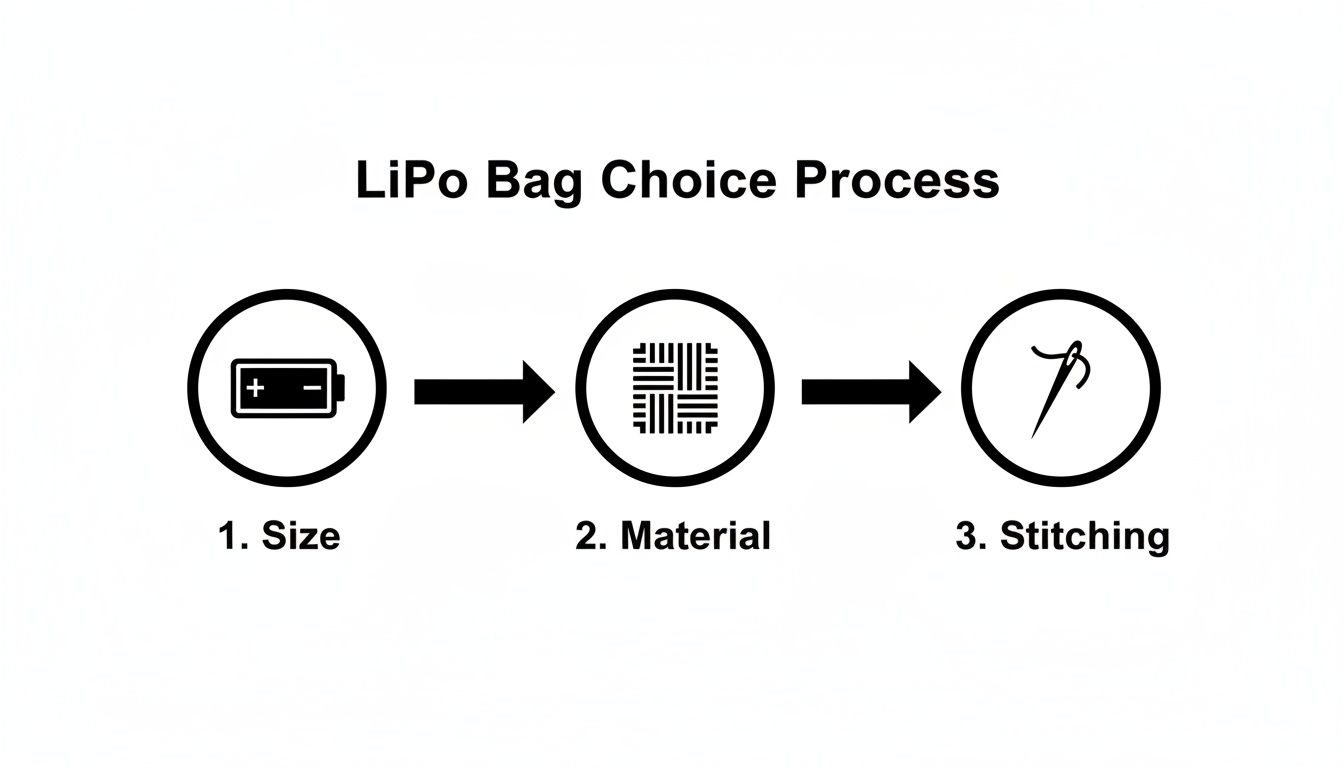
Essentially, a proper fit, fire-resistant fabric, and reinforced seams are the three pillars of a LiPo bag that will actually do its job when you need it to.
Understanding Storage Charge Mode
That "storage charge" setting on your charger is your battery's best friend. A fully charged LiPo is at its most volatile, while a completely dead one can be permanently damaged. The storage function brings each cell to its happy place—a resting voltage of around 3.80-3.85 volts per cell.
This neutral state drastically reduces the internal chemical stress on the battery, making it far safer to store and seriously extending its lifespan. Make it a non-negotiable habit to storage charge your packs after every race day.
Key Takeaway: Never store your LiPo batteries fully charged or fully discharged for more than 24 hours. Using the storage charge function minimizes risk and maximizes the battery's performance and longevity.
Treating your LiPos with this level of care is really just a part of building a culture of safety in your hobby. Looking at how other industries build effective health safety management systems can even offer great insights into creating your own rock-solid pit protocols.
Long-Term Storage Rules
Storing your batteries correctly over the long term is just as important as charging them safely. In places like California, RC LiPo batteries are classified as hazardous waste because of the high levels of heavy metals they contain. Some packs have been found with cobalt levels over 20 times the state's legal limit and copper nearly 40 times the limit. This just highlights the serious risk of fire or toxic leaks if they aren't handled correctly. Using a lipo battery safety bag for storage is a simple way to add a crucial layer of containment against thermal runaway.
Follow these simple rules for storing your batteries at home or in your workshop:
- Temperature Control: Keep your packs in a cool, dry place, ideally at room temperature. Don't leave them in a hot car or a freezing garage.
- Use a Safety Container: Always store LiPos inside a lipo battery safety bag, a metal ammo can with the rubber seal removed, or another fire-resistant box.
- Separate from Flammables: Make sure your stored batteries are kept well away from anything that could easily catch fire.
By making these practices a routine part of your RC hobby, safety becomes second nature. You'll protect your investment and ensure you're always ready to hit the track.
Traveling Safely with Your LiPo Batteries
Your LiPo safety plan doesn't end when you leave your workshop. Whether you're heading to a local club race or a major national event, you need a solid plan for transporting your gear safely. This is about more than just convenience—it’s about protecting yourself, other racers, and staying on the right side of transportation rules.
Most sanctioned RC tracks and events have a non-negotiable rule: all charging must be done inside a lipo battery safety bag. This isn't a friendly suggestion; it's a hard requirement for hitting the track. One battery fire in the pits without proper containment can endanger everyone, fry expensive equipment, and shut down an entire event.
Race directors enforce this because they've seen what happens when a LiPo lets go. They know that a quality safety bag is the one thing that can turn a potential catastrophe into a manageable incident. Show up with your high-end charger and race-ready batteries but no bag, and you'll likely be packing up before you ever turn a lap.
Navigating Airline Regulations for LiPos
When your race requires a flight, the rules get even more serious. The International Air Transport Association (IATA) has strict, clear regulations for carrying LiPo batteries on planes, and they don’t mess around. Ignoring these can lead to your expensive batteries being confiscated and some hefty fines.
The number one rule is simple: spare LiPo batteries are absolutely forbidden in checked luggage. They must travel with you in your carry-on. Why? The cargo hold is inaccessible during flight, and an uncontained fire down there would be a disaster.
Here are the key IATA guidelines every racer needs to know:
- Capacity Limits: Batteries under 100 Watt-hours (Wh) are generally allowed in carry-on bags. Thankfully, most standard RC race packs (like a 2S 7.6V 6000mAh LiPo) fall comfortably under this limit.
- Quantity: While there isn't usually a hard limit on the number of sub-100Wh batteries, airlines expect you to carry a "reasonable" amount for personal use. It's always a good idea to check your specific airline's policy before you head to the airport.
- Terminal Protection: You have to prevent the battery terminals from short-circuiting. You can do this by putting electrical tape over the connectors, but the best practice is to place each battery in its own individual lipo battery safety bag.
The Bigger Picture on Safety Standards
These travel rules aren't just arbitrary red tape; they're built on safety principles designed to protect thousands of people. This "containment-first" mindset is the same one being used at a massive scale. Think about California's huge grid-scale battery storage facilities—after a few incidents, regulators mandated better fire containment and emergency plans. Those standards mirror exactly what we do in the pits.
Using a lipo battery safety bag for your 2S packs is just a micro-version of those grid-scale protections. It's all about making sure a failure is contained.
Understanding these regulations is mission-critical for any traveling racer. For a more detailed breakdown, check out our complete guide covering LiPo battery rules in Canada. By packing your LiPos correctly in their safety bags and keeping them in your carry-on, you can have a stress-free trip and show up at the track ready to race, confident that your gear is both safe and compliant.
How to Spot and Respond to a LiPo Failure
Knowing the early warning signs of a failing LiPo is a critical skill for any racer. It can be the difference between a minor inconvenience and a serious fire. A healthy battery is predictable, but a compromised one is a ticking time bomb. Your eyes, nose, and even your sense of touch are your first lines of defence.
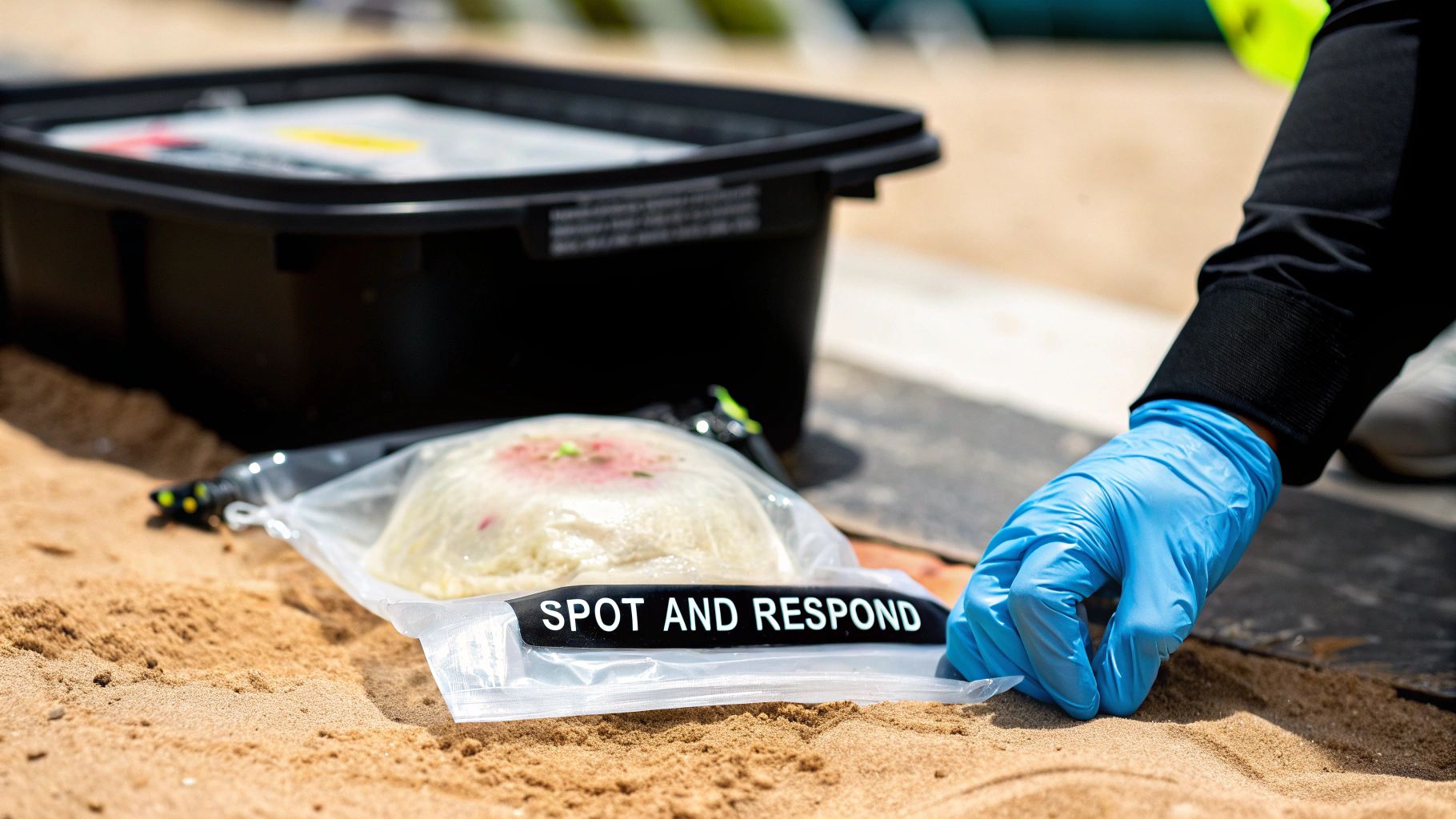
The most obvious red flag is any physical change to the battery's case. Keep a close eye out for these tell-tale signs:
- Puffing or Swelling: This is the classic sign of a dying LiPo. Gas is building up inside the cells, causing the case to expand. Even a slightly puffy battery is compromised and must be taken out of service immediately.
- Physical Damage: A hard crash can leave its mark. Dents, deep scratches, or crushed corners can create internal short circuits that won't show up until you try to charge it. Never, ever attempt to charge a visibly damaged pack.
- Excessive Heat: LiPos get warm during normal use, but a battery that's too hot to comfortably hold during a charge cycle is screaming for help. Unplug it right away.
Immediate Action Plan for a Battery Failure
If you spot any of these signs, or worse, see smoke, the key is to stay calm and act deliberately. Your goal is to contain the situation and move the battery to a safe place.
- Disconnect Power Safely: If the battery is on a charger and you can do so safely, kill the power. Don't risk a serious burn to get to the plug.
- Do Not Use Water: This is non-negotiable. Never throw water on a lithium polymer fire. The lithium will have a violent chemical reaction with the water, making the fire far, far worse.
- Contain and Move: Your pack should already be in its lipo battery safety bag. Carefully pick up the entire bag and move it to a safe outdoor location, like a concrete driveway, well away from anything flammable.
- Extinguish If Necessary: Always have a Class D fire extinguisher or a bucket of sand on hand. Once the bag is in a safe spot, you can use these to smother any remaining flames.
If, despite your best efforts, a LiPo failure turns into a larger fire, understanding the aftermath is crucial. You can learn more from this comprehensive a homeowner's guide to fire damage and restoration.
Safe Disposal: The Final Step
Once the event is over and the battery is completely cool, you have to dispose of it properly. The regulations around this are getting stricter for a reason. As of January 1, 2026, California has a new fee on battery products specifically to fund safer recycling programs—a direct response to the fire risks LiPos present.
For us racers, it just reinforces what we should already be doing: handling our batteries responsibly from the moment we buy them to the moment we retire them.
Don't just toss an old LiPo in the household rubbish. Take it to a designated hazardous waste collection site or a local battery recycling facility. It's the only responsible way to complete its lifecycle.
Common Questions About LiPo Safety Bags
Even for seasoned racers, a few common questions always pop up in the pits when it comes to LiPo safety. Let's clear up the most frequent ones with some straight-to-the-point answers to keep you and your gear safe.
Can I Charge Multiple Batteries in One Large Bag?
That's a hard no. It might seem efficient, but charging more than one battery in a single lipo battery safety bag is asking for trouble.
If one pack has a thermal runaway, the intense heat will almost certainly trigger a chain reaction with the others. That combined event will easily overwhelm the bag, turning a contained incident into a much larger, more violent fire. The only safe way is one bag per battery, every single time. If you're running a multi-channel charger, you need a separate bag for each pack.
How Often Should I Replace My LiPo Bag?
Think of your lipo battery safety bag as a consumable safety item, not a permanent tool. You need to give it a quick inspection before every single use. Look for any frays, small tears, holes, or damage to the velcro closure.
If your bag has ever contained a battery incident—even if it was just a puff of smoke—replace it immediately. Its fire-retardant material has been compromised, and you can't trust it to do its job again.
As a good rule of thumb, plan on replacing your bags every couple of race seasons, or as soon as they show any real signs of wear and tear. This ensures it's always ready to perform its critical job when you need it most.
Are LiPo Bags Completely Fireproof?
No, and this is a crucial point to understand. These bags are fire-resistant, not fireproof. Their job is to contain the initial, most violent stage of a battery failure—the flames, the pressure, and that first blast of intense heat.
A good bag is engineered to give you those vital seconds you need to kill the power and move the contained fire to a safe place, like an outdoor concrete surface. It manages the failure by venting the smoke and pressure in a controlled way, preventing a more dangerous explosion. Always charge on a non-flammable surface, and never, ever leave a charging LiPo unattended, even inside a bag.
Will a LiPo Bag Affect My Battery's Performance?
Not at all. A lipo battery safety bag is just a passive safety container. It doesn't interact with the battery's chemistry or the charging process in any way.
It won’t interfere with your charger’s connections or its ability to balance the cells properly. Using a bag has zero effect on charge times, your battery’s punch on the track, or its overall performance. It's simply a critical layer of protection that comes with no downsides.
At Digital-RC, we stock the high-quality, reliable LiPo safety bags you need to protect your investment and stay safe at the track. Explore our collection of essential RC racing safety gear today.